
Brockovich's Eye on AI Data Centers
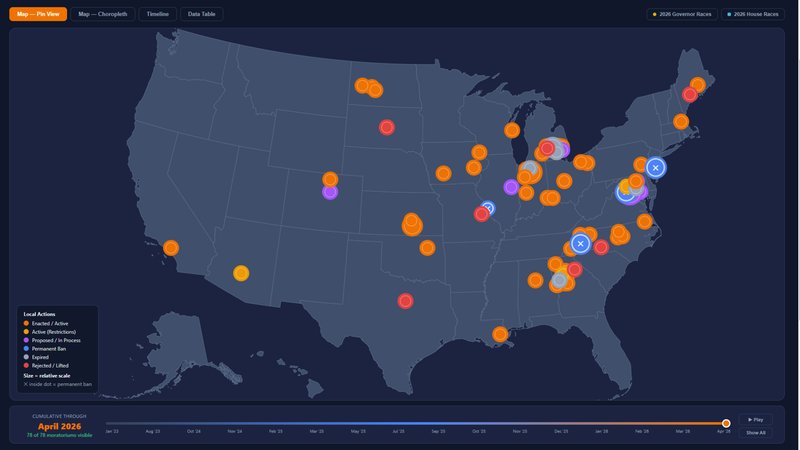
Erin Brockovich, a figure renowned for her historic battles against pollution and corporate negligence, has shifted her focus to the growing impact of data centers powering artificial intelligence. The activist has launched an initiative inviting affected communities to report issues and concerns related to these infrastructures. Her website has already collected over 2,700 reports from various locations across the United States, highlighting a wide range of concerns.
This initiative underscores a growing public awareness regarding the physical and environmental footprint of AI technologies. For CTOs, DevOps leads, and infrastructure architects, this means that the planning and deployment of AI systems can no longer be limited to performance metrics or TCO alone, but must also consider the impact on the local environment and communities.
The Weight of AI Infrastructure: Energy and Land
Data centers, particularly those designed to handle intensive workloads for Large Language Models (LLMs) and other artificial intelligence applications, are known for their substantial resource demands. Energy consumption for Inference and training of complex models is significant, representing a substantial component of the Total Cost of Ownership (TCO) and a critical factor in selecting a location for large-scale deployment.
Beyond energy, these infrastructures require advanced cooling systems and occupy large physical spaces. Such requirements can generate tangible local impacts, such as increased noise, water consumption for cooling, and land use. These factors are particularly critical for organizations evaluating self-hosted or bare metal solutions, where direct infrastructure management entails a more direct responsibility towards the surrounding environment and communities.
Implications for On-Premise Deployment and Data Sovereignty
The reports collected by Erin Brockovich highlight the importance of adopting a holistic infrastructure planning approach. For companies opting for on-premise deployment, site selection is no longer just a matter of network connectivity, land cost, or energy availability, but also includes evaluating environmental impact and local community acceptance. Regulatory compliance and data sovereignty often push organizations towards local or air-gapped solutions, but these must balance technical requirements with social and environmental responsibilities.
Proactive management of these concerns becomes an integral part of the risk strategy and overall TCO for CTOs and system architects. Ignoring such aspects can lead to project delays, unforeseen costs, and reputational damage, factors that can outweigh performance benefits or data control.
Beyond Performance: A Holistic Perspective on AI
While the tech industry continues to focus on optimizing metrics such as throughput, latency, and GPU VRAM capacity, Erin Brockovich's initiative serves as a reminder that artificial intelligence has a physical dimension and a concrete impact on the real world. Sustainability and corporate social responsibility are becoming non-negligible factors in the evaluation and design of AI architectures.
For those evaluating on-premise deployment or hybrid strategies, analytical frameworks, such as those offered on /llm-onpremise by AI-RADAR, can help assess these complex trade-offs. Such tools integrate technical, economic, and environmental aspects, providing a comprehensive view. This holistic approach is essential to ensure that technological innovation proceeds hand-in-hand with sustainability and community well-being, transforming challenges into opportunities for more responsible AI deployment.










💬 Comments (0)
🔒 Log in or register to comment on articles.
No comments yet. Be the first to comment!