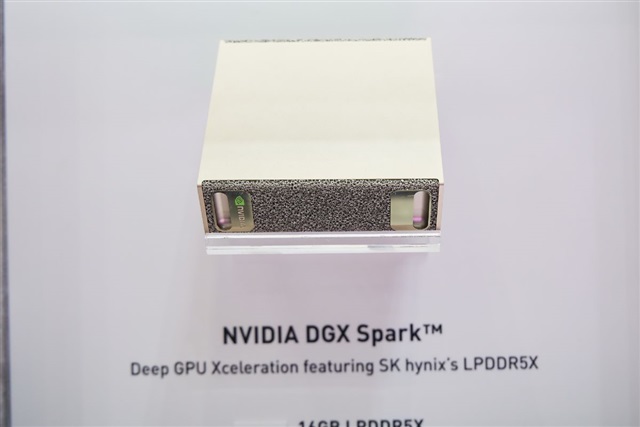
The story, reported by DIGITIMES, looks like a product move: Nvidia is pushing personal AI computers. But the title signals something deeper: the center of gravity of AI compute is shifting from cloud data centers to local machines. This is not just about new consumer graphics cards; it is a redrawing of the boundary between cloud, edge, and on-premise.
The turning point is that inference—the phase where an LLM produces output—can run on hardware that does not have to sit in a remote rack. A personal AI computer is, in effect, a miniature on-premise node: it keeps data on the device, reduces network latency, and gives the user direct control over the model. For a company evaluating LLM deployment, this is not a hobbyist curiosity but a concrete option for sensitive workloads.
The main constraint remains VRAM. Consumer GPUs have less video memory than data center accelerators, which forces the use of quantization to fit smaller models into tighter spaces. The trade-off is well known: quantization can reduce footprint and speed up inference, but it can also degrade output quality. Teams designing on-premise pipelines must therefore reason about smaller models, targeted fine-tuning, and hybrid architectures—not exact replicas of what runs in the cloud.
Economically, Nvidia's push shifts incentives. Cloud dominance was built on turning CapEx into OpEx and promising near-infinite scalability. But when local hardware becomes capable enough to run a useful LLM, the equation reverses: for stable workloads and regulated data, upfront investment in on-premise machines can reduce recurring costs and strengthen data sovereignty. It is not an automatic win, because maintenance, power, and upgrades remain the owner's burden, but the calculation becomes more nuanced.
The structural signal is this: Nvidia is not just expanding its lineup; it is educating the market to treat the local device as a credible alternative to the cloud. Second-order effects are already visible in outline. PC OEMs gain a new sales argument; cloud API providers risk losing lightweight inference share; IT teams must manage heterogeneous fleets of local machines, not just a single API endpoint. The third consequence is less visible but more durable: models will have to be designed to run well on constrained hardware, shifting attention from massive training to efficiency at execution time.
It is no coincidence that this intersects with data sovereignty. A personal AI computer can process documents, email, and conversations without sending them to external servers—a requirement that is becoming increasingly relevant under GDPR in Europe. For those evaluating on-premise deployment, trade-offs exist between control and operational complexity; AI-RADAR's /llm-onpremise section offers analytical frameworks to assess them.
Nvidia's move does not close the cloud versus on-premise debate: it reopens it, lowering the bar to where personal computers become infrastructure.







💬 Comments (0)
🔒 Log in or register to comment on articles.
No comments yet. Be the first to comment!