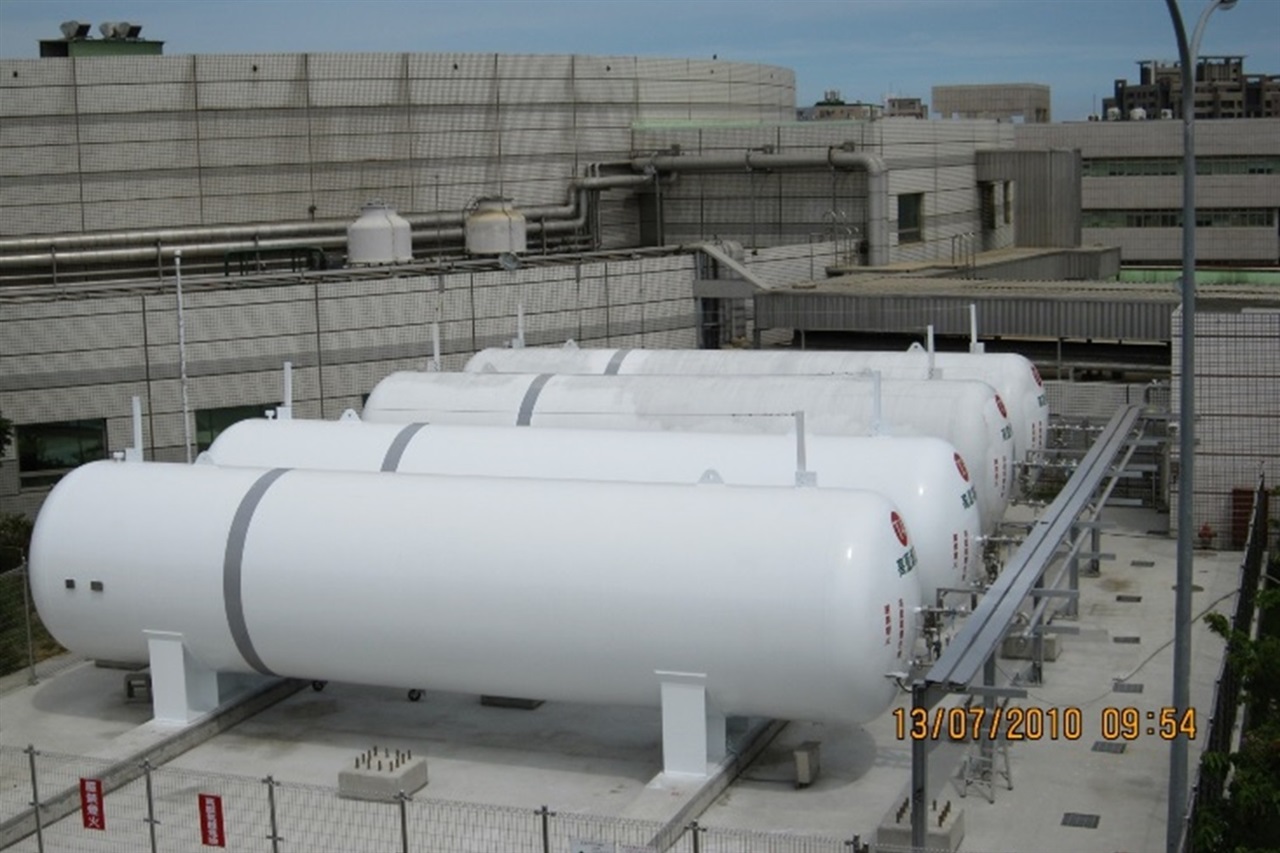
The center of gravity of global helium is shifting. Taiwan, South Korea, and Japan — three pillars of advanced electronics manufacturing — now increasingly rely on US exports after Qatari supplies lost reliability. This is not a minor industry footnote: helium is an irreplaceable inert gas in several chip production steps, from cooling superconducting magnets in lithography plants to plasma etching and as a carrier gas for ultra-sensitive materials. Without a stable supply, foundries slow down. And when foundries slow down, the entire pipeline for AI hardware — GPUs, accelerators, high-bandwidth memory — accumulates delays and price hikes.
The Qatari crisis is not sudden but structural. Geopolitical instability in the region and competition for gas use in other sectors (from medical cryogenics to space launches) have eroded the predictability of shipments to East Asia. The United States, in contrast, expanded production capacity through extraction from natural gas fields in Texas and Wyoming, where helium is separated as a byproduct. This enabled long-term contracts and more secure logistics routes across the Pacific.
For those managing on-premise deployment of LLMs, the news carries indirect but concrete strategic value. The surge in demand for GPUs for inference and fine-tuning — from A100s to H100s and next-generation chips — already collides with manufacturing bottlenecks. Any factor that mitigates uncertainty in the semiconductor supply chain helps make the Total Cost of Ownership (TCO) of local infrastructure more sustainable. Fewer wafer production disruptions mean faster deliveries and a less volatile secondary market, two decisive factors for anyone planning on-premise clusters without infinite inventory buffers.
There is a flip side, however. Dependence on American helium introduces a new single point of vulnerability: Washington’s trade policy. Tariffs, selective embargoes, or environmental regulations could once again redraw the supply map, cascading onto the production capacity of TSMC, Samsung, and Japanese fabless companies. In other words, the risk shifts from a Qatari logistics node to a US regulatory node, not necessarily more predictable. Organizations evaluating on-premise hardware investments would do well to incorporate this variable into their risk models, alongside more commonly discussed ones like energy costs or network latency.
The episode signals, on a structural level, just how fragile and interconnected the physical foundations of digital remain. While the AI debate focuses on model architectures and quantization techniques, the reality is that without helium, the wafers on which those models run cannot be produced. And this is not a passing alarm: global helium demand is steadily rising, driven precisely by the semiconductor sector and cryogenic applications for quantum computing. The American shift offers a reprieve but does not solve the fundamental issue of a non-renewable natural resource trapped in complex geopolitical balances.







💬 Comments (0)
🔒 Log in or register to comment on articles.
No comments yet. Be the first to comment!