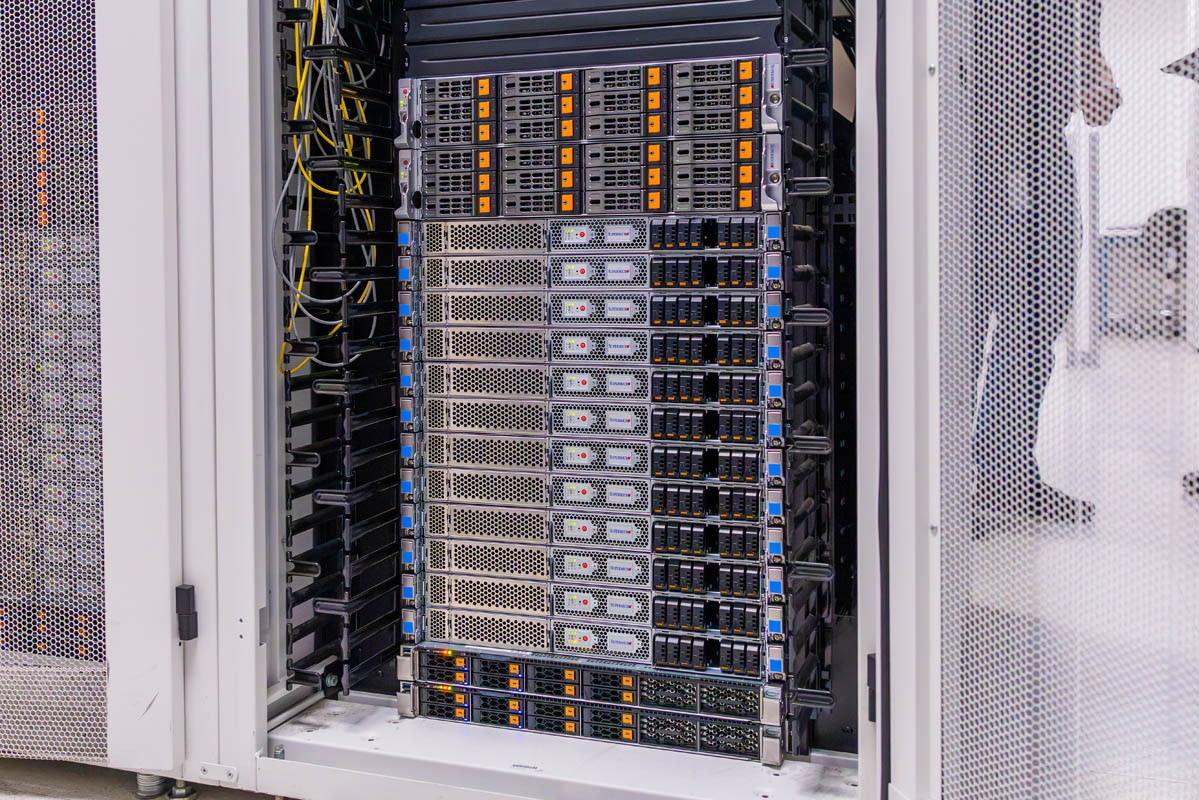
F5's lab has produced a result worth noting: with BIG-IP Next for Kubernetes, the same GPU cluster delivered more than triple the performance. This is not a new accelerator generation, nor a jump in VRAM. The gain comes from how traffic to compute nodes is managed, load-balanced, and routed.
Kubernetes is now a common operational platform for many AI workloads, but the network often remains an underappreciated element. When a cluster runs inference or fine-tuning, data must move quickly between storage, nodes, and serving processes. Any bottleneck on that path leaves GPUs waiting, wasting part of the purchased capacity.
The thesis emerging from the F5 test is that the next leap in AI cluster efficiency will not come only from hardware, but from reducing friction between the data plane and the control plane. If a network component can unlock existing capacity, the conversation about TCO changes: adding GPUs is no longer the only lever for scaling.
For teams running local infrastructure, this has concrete implications. On-premise clusters often cannot scale horizontally as easily as cloud environments, so per-node efficiency becomes central. An improvement of this kind can reduce pressure to overprovision and shift some budget from silicon to software and network configuration. On the other side, there is the risk of tying optimization to a proprietary stack, creating new forms of technology dependence.
The figure comes from the vendor's own lab and will need to be verified on real workloads. But the structural signal is clear: AI infrastructure maturity also depends on the ability to orchestrate traffic, not just on accumulating compute. For those evaluating on-premise deployments, AI-RADAR offers analytical frameworks at /llm-onpremise to compare these trade-offs.








💬 Comments (0)
🔒 Log in or register to comment on articles.
No comments yet. Be the first to comment!