Nvidia's Dominance in the AI Landscape
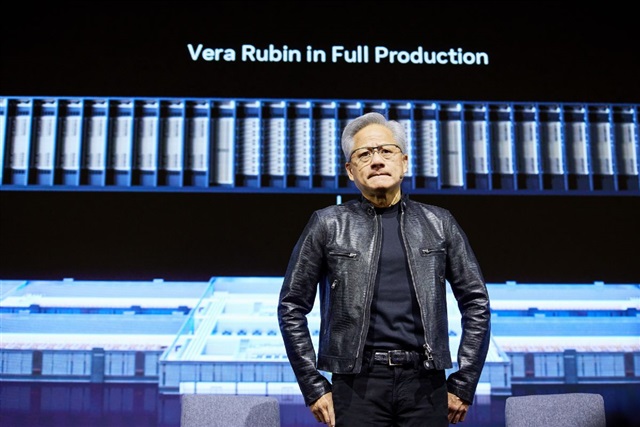
Nvidia remains a central player in the artificial intelligence landscape, particularly concerning hardware dedicated to accelerating Large Language Model (LLM) workloads. Its leadership is not accidental but the result of a targeted strategy, led by CEO Jensen Huang, which involves significant investments to maintain a competitive edge in a rapidly evolving sector. This market dynamic has direct repercussions for companies evaluating AI deployment solutions, whether in the cloud or on-premise.
The AI accelerator market is characterized by extremely high demand, driven by the proliferation of new models and the ever-increasing need for computing power for Inference and training. Nvidia's ability to constantly innovate and provide cutting-edge solutions is a key factor that allows it to set the pace, influencing the availability and cost of essential hardware resources for the development and Deployment of large-scale AI applications.
The Importance of Hardware for Large Language Models
LLMs require a vast amount of computational resources, particularly VRAM and parallel processing capabilities, to operate efficiently. High-end GPUs, such as those produced by Nvidia, have become the de facto standard for these operations, thanks to their architecture optimized for parallel workloads. Memory density and the speed of interconnection between GPUs are critical factors determining a system's performance in handling complex models and large context windows.
For organizations choosing a self-hosted Deployment, hardware selection is a strategic decision that profoundly impacts the Total Cost of Ownership (TCO) and future scalability. The availability of GPUs with adequate specifications, their integration into local stacks, and the management of Inference pipelines are fundamental aspects. Nvidia's strategy, focused on continuous innovation, ensures that the market has increasingly powerful hardware, but at the same time creates a technological dependency that companies must carefully consider.
Implications for On-Premise Deployments and Data Sovereignty
Nvidia's leadership and pricing policies have a direct impact on on-premise Deployment decisions. Acquiring and maintaining state-of-the-art hardware infrastructure for LLMs represents a significant initial investment (CapEx) but offers advantages in terms of control, security, and data sovereignty. Companies with stringent compliance requirements or operating in air-gapped environments often prefer self-hosted solutions to keep data within their operational boundaries.
The evaluation between an on-premise Deployment and the use of cloud services is not limited to the cost of GPUs. It also includes energy costs, maintenance, cooling, and the management of specialized technical personnel. Nvidia's strategy, while ensuring access to high-performance technologies, requires companies to carefully plan hardware acquisition and upgrades, balancing performance and economic sustainability. For those evaluating on-premise Deployments, analytical frameworks are available on /llm-onpremise that can help assess these complex trade-offs.
Future Prospects and Challenges for the AI Ecosystem
Nvidia's ability to maintain its top position through consistent investments is a decisive factor for the evolution of the entire AI ecosystem. However, this dynamic also raises questions regarding market diversification and the emergence of alternatives. While Nvidia continues to push the limits of hardware performance, other players are exploring solutions based on different architectures or Open Source approaches to reduce reliance on a single vendor.
For businesses, the challenge remains to navigate a rapidly evolving market, choosing the hardware and software solutions that best fit their specific needs, budget constraints, and security requirements. Nvidia's strategy, while consolidating its position, indirectly stimulates innovation and the search for efficiency even among those seeking alternatives, contributing to a continuous debate on the most effective Deployment models for the future of artificial intelligence.









💬 Comments (0)
🔒 Log in or register to comment on articles.
No comments yet. Be the first to comment!