
The Acceleration of AI in the Enterprise
OpenAI recently outlined its vision for the next phase of artificial intelligence in the enterprise sector, a domain currently experiencing rapid acceleration in the adoption of these technologies. The integration of AI solutions is no longer a futuristic prospect but an operational reality transforming processes and strategies across a wide range of industries. This evolution presents companies with new opportunities, but also complex decisions regarding infrastructure and data management.
The growing interest in enterprise-level AI is fueled by the promise of greater efficiency, innovation, and advanced analytical capabilities. However, the large-scale deployment of Large Language Models (LLM) and AI agents requires careful planning, especially concerning scalability, security, and regulatory compliance. Organizations must balance access to cutting-edge AI capabilities with the need to maintain control over their most critical assets.
OpenAI's Solutions and Their Technical Implications
Within the context of this "next phase," OpenAI mentioned several key offerings, including Frontier, ChatGPT Enterprise, Codex, and company-wide AI agents. ChatGPT Enterprise, for instance, is designed to provide businesses with secure and private access to advanced language models, featuring user management and data protection capabilities. This type of solution directly addresses concerns related to the confidentiality of sensitive information processed by LLMs.
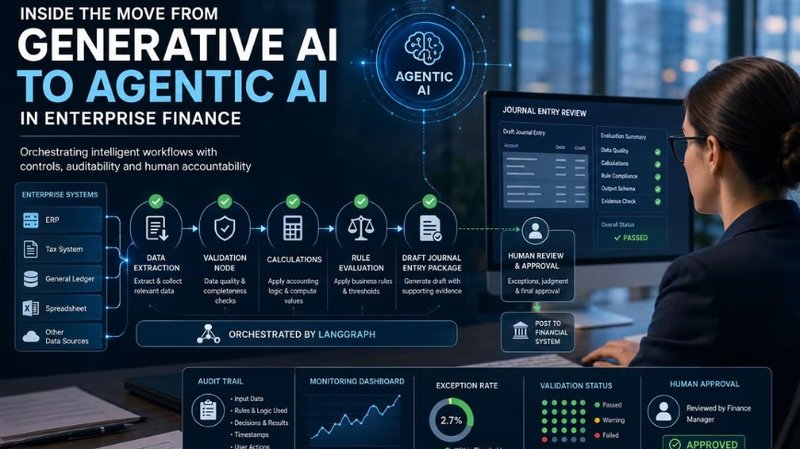
The introduction of enterprise AI agents, capable of automating complex tasks and interacting with existing systems, raises significant technical questions. Their deployment requires not only integration with data pipelines and legacy systems but also ensuring high performance and low latency to support critical operations. The choice of a deployment environment, whether cloud, hybrid, or self-hosted, becomes crucial to meet these requirements and manage the Total Cost of Ownership (TCO) in the long term.
Deployment and Data Sovereignty: The Strategic Crossroads
The acceleration of AI adoption in the enterprise pushes CTOs, DevOps leads, and infrastructure architects to confront a strategic crossroads: relying entirely on cloud-based solutions or exploring on-premise and hybrid alternatives. Although OpenAI's offerings are predominantly cloud-based, the need for data sovereignty, regulatory compliance (such as GDPR), and the management of air-gapped environments compels many organizations to consider the deployment of LLMs and AI stacks locally.
For those evaluating on-premise deployment, significant trade-offs exist. Managing hardware, such as high VRAM GPUs and high-throughput network connectivity, requires expertise and initial investment. However, a self-hosted infrastructure can offer unprecedented control over data, security, and model customization through fine-tuning. AI-RADAR provides analytical frameworks on /llm-onpremise to evaluate these trade-offs, offering tools to compare CapEx and OpEx, and to estimate the TCO of different architectures.
Future Perspectives for Enterprise AI
OpenAI's vision for the next phase of enterprise AI underscores a future where artificial intelligence will be deeply integrated into the operational fabric of businesses. This integration is not just about accessing powerful models but also about organizations' ability to manage, control, and optimize the deployment of these technologies. The choice of infrastructural architecture, whether cloud-based, on-premise, or a hybrid model, will become a distinguishing factor for strategic success.
As innovation in Large Language Models continues to advance, the discussion increasingly shifts towards deployment methods that ensure security, efficiency, and compliance. Companies will need to continue investing in skills and infrastructure to fully leverage the potential of AI, while maintaining a pragmatic approach aware of the constraints and opportunities offered by different deployment models.








💬 Comments (0)
🔒 Log in or register to comment on articles.
No comments yet. Be the first to comment!