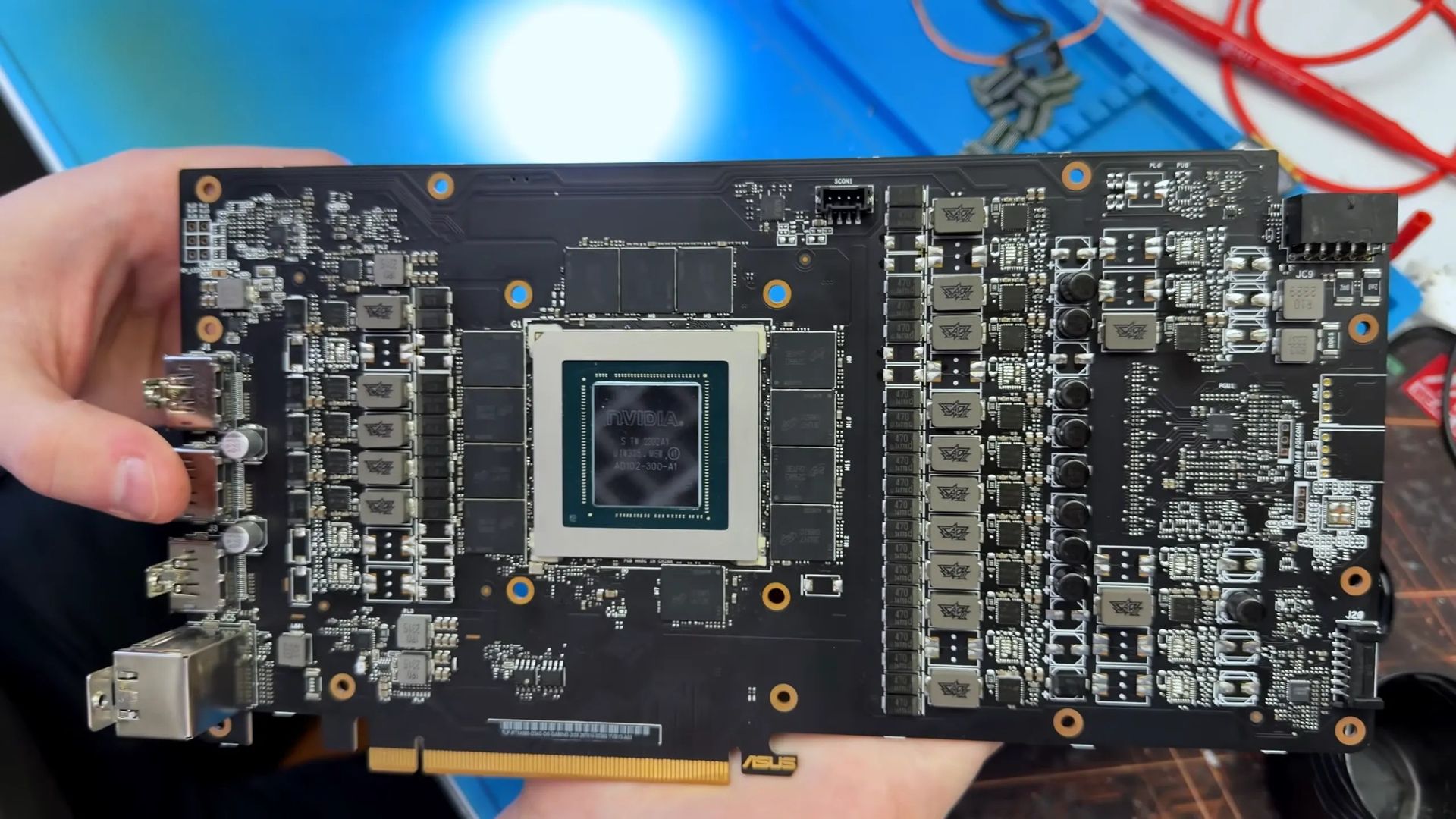
Three hundred and fifty dollars for a GeForce RTX 4090 sold as broken but potentially repairable. When the Russian technician opened the board, however, the picture changed: the GPU die is a highly realistic fake and the memory modules have been swapped. This is not just a bad deal, but a sophisticated scam based on dummy PCBs, designed to fool even people with decent hardware knowledge.
The news comes from a repair specialist who documented the case. The buyer had paid $350 for a broken card, likely hoping to repair it or salvage components. Instead, he ended up with a board that mimics the outside of an RTX 4090 but does not contain the original silicon. The exact technical details of the fake are not yet clear, but the core issue is that the secondary market for high-end GPUs has become profitable enough to attract counterfeiters with resources and skill.
For people working with LLMs locally, this episode carries specific weight. RTX 4090 cards are often used for self-hosted inference: they offer a VRAM capacity that allows loading quantized models without going through the cloud. When a team decides to build a machine for on-premise inference, hardware cost is a major TCO item. Relying on used or refurbished boards can seem like a shortcut, but it introduces a counterfeiting risk that official channels do not have. A fake board, or one with swapped memory, not only fails to work but can disrupt the entire pipeline, blocking fine-tuning tests or inference serving.
There is also an incentive dimension. Demand for AI GPUs keeps growing, and prices for new cards remain high. This pushes buyers toward the secondary market while also pushing scammers to create ever more credible products. Those who lose are small labs and independent developers without access to verified suppliers. Those who profit, obviously, are fraudulent sellers, but also providers of hardware verification tools or inspection services. In the medium term, the used market could split: on one side unverified listings, on the other resellers offering certification and functional testing.
This story is not just about a single buyer. It signals that the race for AI hardware has created a parallel ecosystem where trust is scarce. For anyone evaluating self-hosted LLM deployments, AI-RADAR offers analytical frameworks at /llm-onpremise to compare trade-offs among sourcing channels, real costs, and operational risks. The point is not to demonize the secondary market, but to recognize that hardware authenticity verification is becoming part of managing local AI infrastructure.






💬 Comments (0)
🔒 Log in or register to comment on articles.
No comments yet. Be the first to comment!