Hardware Enhancement for Local Systems
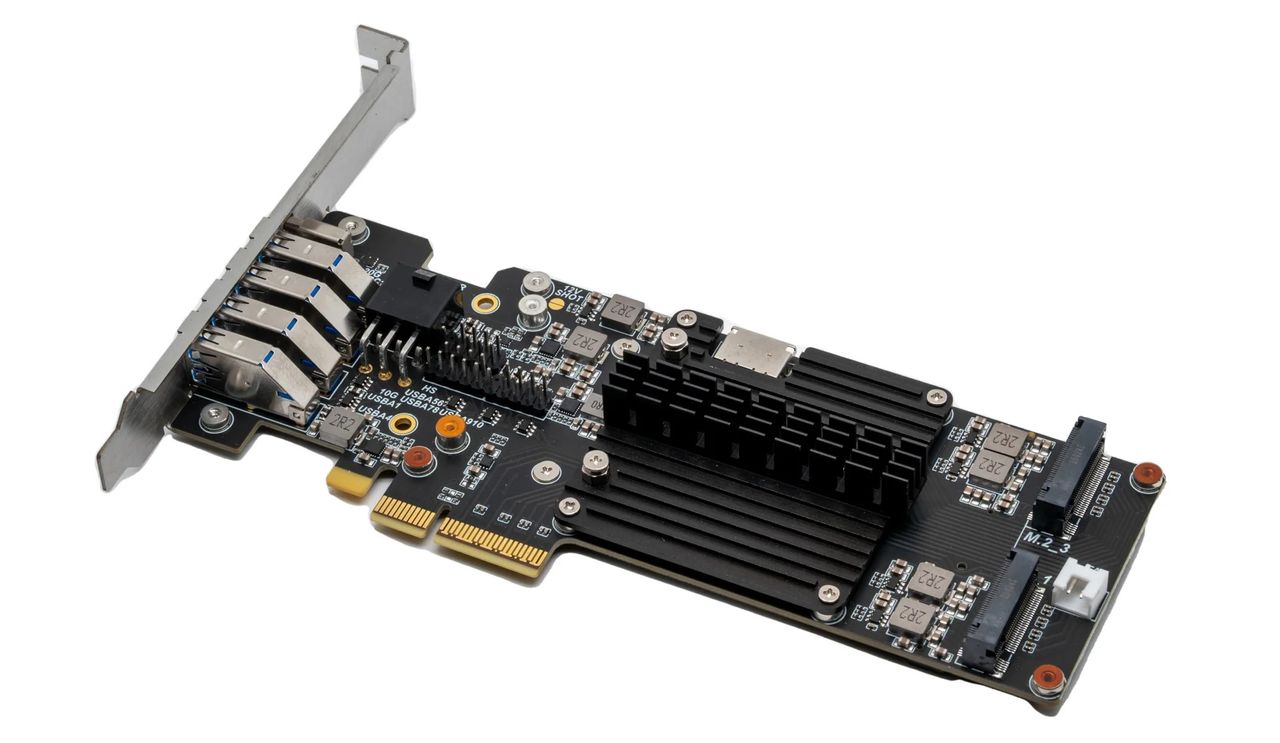
The hardware market continues to evolve, offering increasingly targeted solutions to meet computing and storage needs. In this context, AMD has introduced its B650 expansion cards, now available for retail purchase with a starting price of $199. These cards represent an interesting proposition for users looking to extend the capabilities of their Personal Computers, particularly for those operating with intensive workloads and requiring greater infrastructural flexibility.
The primary goal of these cards is to provide significant expansion in terms of storage and connectivity. This approach allows for leveraging existing hardware, extending its lifecycle, and optimizing initial investments. For companies and professionals who prefer an on-premise approach, solutions like these can make a difference in the daily management of resources.
Technical Details and Features
AMD B650 expansion cards stand out for their technical specifications, designed to improve system performance and versatility. Each card integrates four M.2 slots compatible with the PCIe 4.0 standard. This means users can add up to four high-speed NVMe storage drives, benefiting from the high read and write speeds offered by PCIe 4.0. This capability is crucial for applications requiring fast access to large volumes of data, such as datasets used for training or Inference of Large Language Models (LLMs).
In addition to storage expansion, the cards also offer a significant increase in connectivity, providing eleven extra USB ports. This abundance of ports allows for connecting a wide range of peripherals and external devices, supporting complex configurations or simply providing greater convenience for daily use. Compatibility is guaranteed with any PC equipped with a free PCIe slot, making installation accessible to a wide audience of users and system integrators.
Implications for On-Premise AI Deployments
For CTOs, DevOps leads, and infrastructure architects evaluating AI and LLM workload deployments, AMD B650 expansion cards offer compelling insights. The ability to add high-speed M.2 PCIe 4.0 storage is fundamental for managing large LLM models and complex datasets. PCIe 4.0's throughput speed reduces model loading times into VRAM and accelerates read/write operations during Fine-tuning or Inference, improving overall system efficiency.
A robust on-premise infrastructure, enhanced by components like these cards, directly supports data sovereignty and regulatory compliance, critical aspects for many organizations. Keeping data and AI workloads within one's physical or corporate boundaries allows for tighter control over security and privacy. Furthermore, local hardware expansion can contribute to optimizing the Total Cost of Ownership (TCO) in the long term, reducing reliance on external cloud services and their associated variable operational costs. For those evaluating the trade-offs between self-hosted and cloud solutions, AI-RADAR offers analytical frameworks and insights on /llm-onpremise to support informed decisions.
Future Prospects and Infrastructure Control
The introduction of expansion cards like those based on AMD B650 highlights a market trend towards modular and customizable solutions. This flexibility is particularly valued in environments where computing and storage needs evolve rapidly, such as in the artificial intelligence sector. The ability to upgrade and adapt existing hardware without resorting to complete system replacements offers a significant advantage in terms of agility and sustainability of investments.
For organizations aiming to build and maintain a robust and locally controlled AI infrastructure, these cards represent a useful component. They allow for balancing performance, costs, and security requirements, providing the necessary tools to address the challenges of modern AI workloads with greater autonomy. The choice to enhance on-premise hardware reflects a strategy that prioritizes direct control and customization, key elements for the success of the most demanding AI deployments.







💬 Comments (0)
🔒 Log in or register to comment on articles.
No comments yet. Be the first to comment!