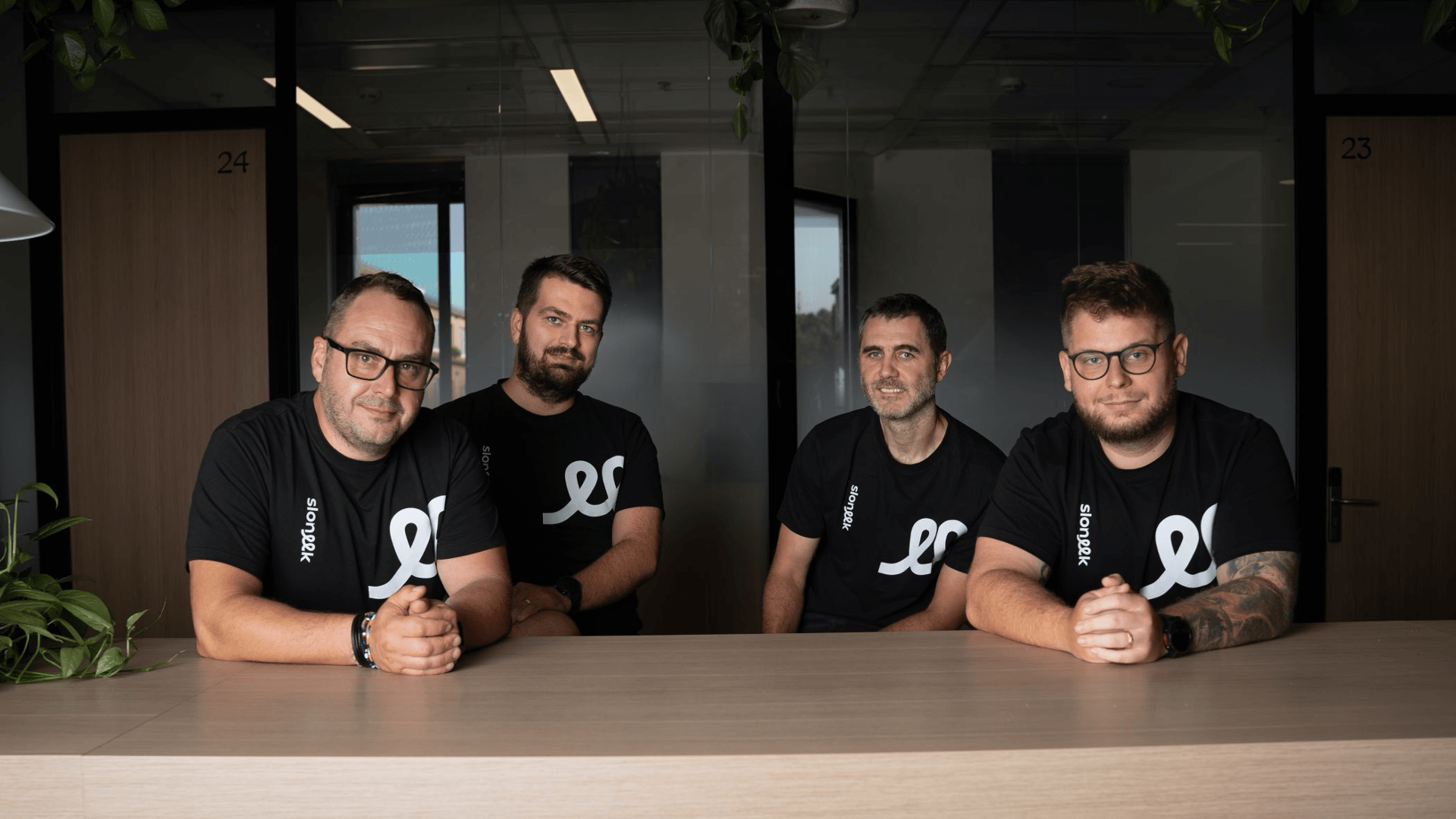
Sloneek Focuses on AI Agents for HR
Sloneek, an HR SaaS startup, has announced it has raised $6 million in a new funding round. The operation, led primarily by Orbit Capital and Venture to Future Fund, significantly exceeded the company's original target, underscoring investor confidence in its growth and innovation trajectory.
The capital injection is earmarked to support Sloneek's expansion into new European markets, with a particular focus on the United Kingdom and Poland. Concurrently, the company will invest in developing local integrations and completing its artificial intelligence capabilities, aiming to evolve the platform into an "agentic" HR system, meaning one based on autonomous AI agents. Founded in 2019, Sloneek has demonstrated remarkable adaptability, transforming from a regional HR tool into an AI-powered platform serving companies across Europe. The native integration of generative AI into its product, implemented as early as 2023, accelerated customer adoption and supported international expansion.
The Potential of AI Agents in HR
At the core of Sloneek's offering is Sloneek Intelligence, an AI-powered HR agent designed to automate routine tasks and provide HR teams with a unified view of their workforce. The platform enables organizations to manage employee data, workforce planning, talent management, and analytics, all within a secure environment specifically designed for sensitive HR information. This focus on security and data management is crucial, especially when dealing with personal and strategic information.
Sloneek's long-term vision is to create an HR platform that can be controlled naturally through chat or voice commands, seamlessly integrating with other workplace tools and AI systems. Filip Lukáč, CEO and co-founder of Sloneek, expressed the ambition to be the first "agentic" HR platform fully controllable via voice or text. This perspective transforms the software from a mere application into an integrated "partner" within daily workflows, emails, and corporate AI solutions. For organizations evaluating the adoption of AI agents or LLMs for HR processes, the handling of sensitive data raises important questions of sovereignty and control. The choice between cloud and self-hosted (on-premise) solutions becomes critical to ensure regulatory compliance and information security.
A Rapidly Growing Market and Compliance Challenges
The funding comes at a time of strong growth for the European HR software market. Last year, this sector exceeded $4.8 billion and is projected to nearly double by 2033, driven by the increasing adoption of cloud-based HR systems and AI-enabled workflows. This trend highlights the need for companies to modernize their HR infrastructures to remain competitive and more efficiently manage their human resources.
Sloneek has already demonstrated solid market traction, being used by over 500 enterprise customers across 25 countries, collectively managing HR processes for approximately 50,000 employees. Its client roster includes well-known names such as Grant Thornton, MAN, WPP Media, and Twisto. The company's annual recurring revenue (ARR) currently stands at €2.5 million, having more than doubled over the past year. Managing sensitive data in a secure environment is a critical aspect for businesses, and for those evaluating on-premise deployments, AI-RADAR offers analytical frameworks on /llm-onpremise to assess the trade-offs between control, security, and TCO.
Future Prospects and Strategic Integrations
A significant portion of the new funds will be used for expansion into the United Kingdom and Poland, where Sloneek plans to establish dedicated local go-to-market teams. This strategy aims to strengthen the company's presence in key markets and respond more specifically to local needs, both in terms of regulations and HR practices.
The company also intends to deepen integrations with key market players. The goal is to enable a continuous flow of HR data across the entire employee lifecycle, from recruitment to payroll. This emphasis on interoperability and integration is fundamental to creating a cohesive and efficient HR ecosystem, where information can be intelligently shared and utilized to optimize all human resources-related processes.







💬 Comments (0)
🔒 Log in or register to comment on articles.
No comments yet. Be the first to comment!