Weekly Digest

๐Ÿ“– AI-Radar ยท 2026-W39

21 September โ€“ 27 September 2026  ยท  60 articles published

๐Ÿ“ LLM 13

Safety, ad hominem, and local control: the real cost of tamed LLMs

Safety, ad hominem, and local control: the real cost of tamed LLMs

Safety fine-tuning is not neutral: it narrows the strategic space of LLMs in real debates. For on-premise deployments, control over weights, pipelines, and TCO becomes the real variable. AI-Radar's analysis focuses on the trade-off between ready-to-use API models and self-hosted systems that can reshape conversational behavior.

25 Sep
Separating Wording and Selection in 902,000 French Headlines Changes the Framing Audit

Separating Wording and Selection in 902,000 French Headlines Changes the Framing Audit

A team built a 10,000-headline supervision set and classified 902,111 deduplicated headlines from 25 French outlets between 2022 and 2025. The framework separates rhetorical salience from editorial selection. Default thresholds inflate salience estimates, and headlines mentioning Jews, the far right, and Muslims show the highest detected salience rates, not fully explained by event context.

25 Sep #LLM On-Premise
SMILESGNN: interpretable clinical toxicity prediction with a 0.4M-parameter model

SMILESGNN: interpretable clinical toxicity prediction with a 0.4M-parameter model

A 0.4M-parameter multimodal model combines SMILES transformers and GATv2 graphs via cross-attention, reaching AUC-ROC 0.987 and F1 0.906 on ClinTox. The ChemBERTa-2-backed variant posts a mean AUC-ROC of 0.750 on Tox21, comparable to larger baselines. The explicit graph branch supports GNNExplainer explanations, showing that performance and interpretability can coexist in compact models suited to on-premise deployment.

25 Sep #Hardware #LLM On-Premise #Fine-Tuning
Forecasting Agents: When Reasoning Is the Wrong Default

Forecasting Agents: When Reasoning Is the Wrong Default

A research group stress-tested forecasting agents to understand when retrieval, reasoning, market priors, or historical analogs deserve trust. Mechanism choice depends on the source. ReliabilityRoute steers behavior using reliability features, and a walk-forward rule obtains the best mean Brier score among deterministic systems across 16 later LLM vintages. The gain is modest: more reasoning is not always better.

25 Sep #LLM On-Premise #DevOps
Where LLMs Disagree: Targeting Expert Effort to Speed Codebook Revision

Where LLMs Disagree: Targeting Expert Effort to Speed Codebook Revision

A study on thousands of tutoring-session transcripts shows that using disagreement among multiple LLMs to target expert attention shortens codebook revision from months to days. Among three methods, Rationale Labeling reaches 64.9% accuracy against 57.8% for the expert-revised codebook. The result signals a shift in incentives: less compute power, more targeted orchestration of human work.

24 Sep #Hardware #LLM On-Premise #DevOps
Chat template switches LLM self-referential voice: self-descriptions aren't literal facts

Chat template switches LLM self-referential voice: self-descriptions aren't literal facts

A study on eight open-source instruct models up to 9B parameters shows that the chat template acts as a switch: when present it raises disclaimers like "I'm just an AI" and lowers experiential expressions, and vice versa. Inside three models' activations, a steerable direction controls this voice. For anyone evaluating self-hosted LLMs, the result signals that self-descriptions are not intrinsic model properties.

23 Sep #LLM On-Premise #Fine-Tuning #DevOps
Open weight: Chinese downloads double US ones and local inference shifts

Open weight: Chinese downloads double US ones and local inference shifts

Nathan Lambert's written Congressional testimony captures a structural shift: since August 2025, Chinese open-weight models have recorded 3.2 billion Hugging Face downloads versus 1.6 billion American ones. On OpenRouter, weekly open model traffic grew from about 1 trillion to 80 trillion tokens, with over 80% from Chinese models. The estimated lag behind the closed frontier is 2-5 months for Chinese models and 6-9 for American ones, with the smallest gap in agentic coding.

23 Sep #Hardware #LLM On-Premise #Fine-Tuning

๐Ÿ“ Altro 14

KDE's AI-native proposal sets the open source community ablaze

KDE's AI-native proposal sets the open source community ablaze

The presentation of an 'AI-native' KDE at Akademy triggered a harsh conflict: deleted threads, bans and a campaign to ban LLMs entirely. Nate Graham apologized for the chaos, while GNOME discusses a similar policy. KDE's new goals do not mention AI, but the issue remains open: how to govern LLM-generated contributions without eroding trust and control.

24 Sep #LLM On-Premise #DevOps
Clastix raises โ‚ฌ2.9M to reduce Kubernetes complexity at scale

Clastix raises โ‚ฌ2.9M to reduce Kubernetes complexity at scale

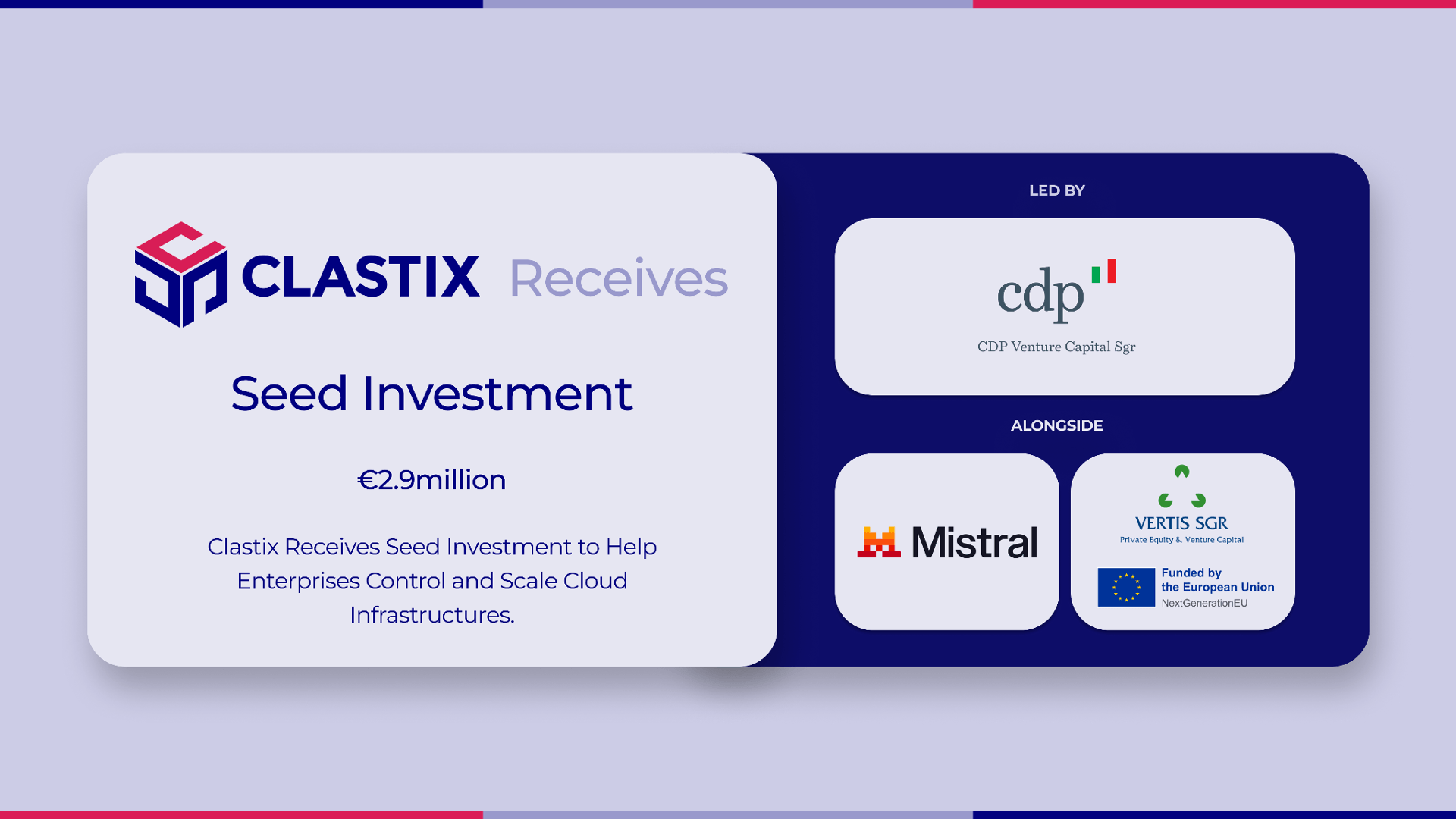
Clastix, an Italian company focused on Kubernetes operations, has raised โ‚ฌ2.9 million in seed funding led by CDP Venture Capital Sgr, with participation from Mistral and VERTIS SGR. Its open-source Kamaji engine and commercial kMetal platform move Kubernetes control planes onto shared infrastructure, reducing overhead and simplifying fleet-scale operations. Mistral says it uses the technology in production for training and inference clusters.

24 Sep #LLM On-Premise #Fine-Tuning #DevOps
FBI Hack Exposes Its Own Hacking Unit

FBI Hack Exposes Its Own Hacking Unit

Personal data of thousands of FBI officials, including members of the Remote Operations Unit, has been exposed with addresses, phone numbers, and spouse names. 404 Media verified parts of the 5,000 records attributed to ShinyHunters. The leak's real sensitivity lies in the organizational map it reveals: roles, units, and personal relationships.

23 Sep #LLM On-Premise #DevOps
DiffuseDrive fills the data gaps holding back physical AI

DiffuseDrive fills the data gaps holding back physical AI

Hungarian startup DiffuseDrive generates synthetic data to train physical AI systems in defence, mining, aerospace and autonomous vehicles. Its platform identifies missing edge cases in datasets, produces them with control over object position and size, and feeds retraining. It can run air-gapped on customer infrastructure; with GPU clusters, data generation takes hours. DiffuseDrive reports performance gains above 10 percent when combining synthetic and real data.

23 Sep #Hardware #LLM On-Premise #Fine-Tuning
ShinyHunters Claims FBI Breach and Data on All Employees, Applicants

ShinyHunters Claims FBI Breach and Data on All Employees, Applicants

ShinyHunters claims it breached FBI-related services and holds data on all FBI employees and applicants. It provided a sample of 5,000 people with names, addresses, phone numbers and spouse details, partly verified through OSINT tools. The attack allegedly used a zero-day in Oracle PeopleSoft and AWS GovCloud. The group denies financial motives and speaks of coercion.

22 Sep #LLM On-Premise
AstroForge puts a small transformer in command of its next spacecraft

AstroForge puts a small transformer in command of its next spacecraft

AstroForge will give its next Autonomy-1 space probe a small transformer-based model responsible for onboard decisions. Local inference becomes unavoidable without connectivity and under severe physical constraints. The shift from deterministic software to learned policy changes validation criteria and moves incentives toward teams that compress and verify models for extreme edge environments.

22 Sep #Hardware #LLM On-Premise #DevOps

๐Ÿ“ Frameworks 18

PyTorch Conference NA 2026 Adds Hands-On Training for GPU, vLLM, and Multimodal AI

PyTorch Conference NA 2026 Adds Hands-On Training for GPU, vLLM, and Multimodal AI

The PyTorch Foundation is adding a hands-on Introduction Track and a full-day PyTorch Associate Training to its North America conference. Sessions cover GPU kernels with Triton, PyTorch trace profiling, vLLM attention internals, and vision-language model serving. Attendees get a $250 certification voucher. A signal that production inference is now an infrastructure discipline.

24 Sep #Hardware #LLM On-Premise #DevOps
JAZ: A Single Invoke Primitive Challenges Specialized Agent Frameworks

JAZ: A Single Invoke Primitive Challenges Specialized Agent Frameworks

Researchers presented JAZ, an LLM agent framework that reduces the harness to a single primitive, invoke, capable of executing arbitrary code and exposing inputs and interaction history to the LLM as variables. Without manual tools or external systems, invoke outperforms Letta by 8% on StuLife at half the cost and ACE by 4% on AppWorld. A direct challenge to specialized memory and self-improvement architectures.

24 Sep #LLM On-Premise #DevOps
Native GGUF support in Transformers: what it means for local deployment

Native GGUF support in Transformers: what it means for local deployment

Hugging Face has added native GGUF support to Transformers. Users can load a quantized model by specifying the file path and use standard APIs. On supported Apple Silicon, ggml kernels are reused, with M2 Max benchmarks close to llama.cpp. The goal is not to replace llama.cpp, but to offer a more flexible environment for debugging and evaluation, lowering the barrier for local hardware.

23 Sep #Hardware #LLM On-Premise #DevOps
A Framework Learns 3D Cell Properties from 2D Images and Population Statistics

A Framework Learns 3D Cell Properties from 2D Images and Population Statistics

A population-supervised framework links 2D red-cell images to latent biophysical quantities, aggregating them into mean corpuscular volume, red-cell distribution width, and mean corpuscular haemoglobin. It combines shared local inference, a structured decoder, learned instance weighting, and device-specific calibration. Across 390 specimens and 1,105 acquisitions from six devices, it reports Pearson correlations of 0.86โ€“0.98 against a Sysmex analyser, without claiming explicit 3D reconstruction.

23 Sep #LLM On-Premise #Fine-Tuning #DevOps

๐Ÿ“ Hardware 12

Mac Studio M5 Ultra: 256GB RAM, GPU bottleneck for local AI

Mac Studio M5 Ultra: 256GB RAM, GPU bottleneck for local AI

A user tested a Mac Studio with M5 Ultra, 256 GB of RAM and an 80-core GPU for agentic inference with GLM-5.3-Flash. They are satisfied overall, but report the GPU feels underpowered relative to memory, raising doubts about a 512 GB model. The case highlights the trade-off between memory capacity and compute power in local LLM hardware.

25 Sep #Hardware #LLM On-Premise
Qwen3.8-Flash-Next on a 12GB RTX 5070 hits 65 tokens/s with a custom engine

Qwen3.8-Flash-Next on a 12GB RTX 5070 hits 65 tokens/s with a custom engine

A 12GB RTX 5070 runs Qwen3.8-Flash-Next at 65.1 tokens/s with a custom inference engine. The Strata project shows how a specialized runtime can beat llama.cpp on the same numerical precision, lifting prompt processing to 543 tokens/s on a 128K context. A signal for local deployment: consumer hardware, aggressive precision reduction, and purpose-built software change the terms of self-hosting.

24 Sep #Hardware #LLM On-Premise #DevOps
Mac M5 Ultra 256GB: Serious Benchmarks Missing, Only Influencer Noise

Mac M5 Ultra 256GB: Serious Benchmarks Missing, Only Influencer Noise

The Mac M5 Ultra with 256GB is on the market but serious benchmarks are missing: only influencers testing 8b models. This information gap hurts those evaluating Apple hardware for self-hosted LLMs, effectively favoring the Nvidia ecosystem. Without repeatable data on inference, quantization, and TCO, the potential of unified memory remains unverified, with implications for data sovereignty and on-premise hardware diversification.

24 Sep #Hardware #LLM On-Premise #DevOps
AMD and GDDR7 on Linux: the infrastructure signal for on-premise inference

AMD and GDDR7 on Linux: the infrastructure signal for on-premise inference

AMD's initial work on GDDR7 support in Linux GPU drivers signals a shift for teams running on-premise AI infrastructure. The seemingly technical news highlights the importance of memory bandwidth for LLM inference and lowers integration friction for self-hosted environments. It's a signal to read through the lens of TCO and data sovereignty, rather than a product announcement.

24 Sep
AMD starts adding GDDR7 support to its Linux GPU drivers

AMD starts adding GDDR7 support to its Linux GPU drivers

AMD has started adding GDDR7 support to its Linux GPU drivers. The bring-up work precedes the arrival of boards and directly touches memory bandwidth, a key variable for LLM inference on local hardware. For teams running self-hosted Linux infrastructure, early support in the open driver reduces integration friction and signals a clear direction, even without product details yet.

23 Sep #Hardware #LLM On-Premise #Fine-Tuning

๐Ÿ“ OnPremise 1

Qwengram-0.8B: External Memory and Dynamic Gating Shift Self-Hosted LLM Trade-offs

Qwengram-0.8B: External Memory and Dynamic Gating Shift Self-Hosted LLM Trade-offs

Qwengram-0.8B freezes Qwen3.5-0.8B and adds a 51-billion-parameter n-gram memory outside the GGUF. Perplexity drops by 5.05%, but the relevant signal is architectural: late injection controlled by a per-token gate, Q8_0 quantized sidecar, and no backbone fine-tuning. For local LLM operators, the separation between weights and knowledge is the key: updating memory without touching the model opens new scenarios but imposes strict constraints on runtimes.

26 Sep

๐Ÿ“ Market 2

โ† 2026-W38 All news 2026-W40 โ†’