LLM On-Premise – Deploy AI Locally
> SYSTEM STATUS: ONLINE
On-premise solutions, server configurations, GPU workstations, and infrastructure to deploy and manage Large Language Models locally. Sovereignty starts here.
LLM On-Premise means running language-model inference entirely on infrastructure you control — the model weights live in your VRAM, the computation happens on your silicon, and zero bits reach a third-party API. It became practical when three things converged: genuinely capable open-weight models (Llama, Qwen, Mistral, Gemma), 4-bit quantization that shrank them onto single GPUs, and mature runtimes (Ollama, vLLM) that made serving them routine. Full conceptual model →
This observatory is the decision-support layer: it exists for the engineer sizing a GPU server, the architect weighing on-prem against an API, and the compliance owner mapping the EU AI Act onto a self-hosted stack. The material is organized as a path:
- Should this workload run locally? → Decision Axes and the deployment comparison
- On what hardware? → Hardware Matrix and Model Cards
- In what shape? → Reference Architectures and Checklists
- Under what rules? → Governance and EU AI Act
For long-form evergreen references — GPU buying, real TCO math, quantization, building a private ChatGPT — see the AI-Radar guides.
> DECISION_SUPPORT_MATRIX
Constraint-based decision frameworks for deployment planning
Compare On-Premise, Hybrid, and API-Only deployment models across 5 decision axes.
ACCESS MATRIX →Industry-specific deployment scenarios with weighted constraints and failure modes.
Standardized deployment patterns with scenario fit analysis and implementation constraints.
Scenario-specific pre-deployment verification checklists. Manufacturing (uptime, edge), Pharma (21 CFR Part 11 validation), Enterprise IT (security, scalability). Verification gates, not recommendations.
VIEW CHECKLISTS →Constraint-focused decision reasoning engine for deployment planning questions.
QUERY SYSTEM →Curated cards for Llama 3.3 70B, Qwen3.6 27B, Mistral Small 3.1, Phi-4, Gemma 3 27B, DeepSeek-R1 32B — VRAM, license, and hardware tier.
BROWSE MODELS →Run LLM agents locally: LangGraph vs AutoGen vs CrewAI, tool sandboxing, persistent memory, token budgets, and security guardrails.
AGENT GUIDE →Mixture of Experts on consumer hardware: active vs total params, VRAM implications, quantization selection, and failure modes for Qwen3.6-35B-A3.7B and Mixtral.
MOE GUIDE →EU AI Act timeline, risk classification, high-risk obligations (Aug 2026 ⚡), and how on-premise deployment simplifies regulatory compliance.
COMPLIANCE GUIDE →> BENCHMARK_METRICS
2026 target configurations — Blackwell & Ada Lovelace
> LATEST_INTELLIGENCE

DeepSeek V4.1 Flash on Hugging Face: self-hosting back in the spotlight
The DeepSeek V4.1 Flash repository appears on Hugging Face without technical details. For teams evaluating self-hosted LLMs, the announcement...

NVIDIA and the 4B BF16 Model: The Specific Weight of Local Inference
A 4-billion-parameter BF16 model from NVIDIA Nemotron Labs appears on Hugging Face. The size matters less than the precision: BF16 keeps it away...

ORL pushes diffusion LLMs to 2,788 tokens/s on a single RTX 5090
The ORL (On-Policy Residual Learning) project aims to speed up diffusion LLMs without sacrificing quality. On a single RTX 5090 the team reports...
Reflection's Beam: Token-Efficient Reasoning, 501B Memory Footprint
Reflection has released Beam, an open LLM with a 501-billion total and 23-billion active parameter MoE architecture. It supports a 1 million token...

Hybrid Reasoning Agents: Hidden Thinking Cuts Token Use and Reshapes Inference Economics
A preprint from Stanford, Together AI, UIUC, and Meta introduces Hybrid Reasoning Agents: models that reason internally and emit text only for...
Tencent Hy-Memory-30B-A3B: Why 3B Active Parameters Matter More Than 30B Total
The model card for Tencent Hy-Memory-30B-A3B sparks debate over a slippery claim: an architecture with 3 billion active parameters out of 30...
Qwen Flash Next: a solo Q2 quant challenges ISTA Lab
A three-day empirical test of GYRO-M, a Q2 quantization of Qwen Flash Next, reports q3-level stability at reduced size. The project comes from a...
Intel Ships LLM-Scaler-vLLM PV 1.5: Docker Stack for LLMs on Arc GPUs
Intel software engineers have released LLM-Scaler-vLLM PV 1.5, a containerized Docker stack designed to simplify LLM inference on Intel Arc...
Open source sovereignty: the boring work of making it real
At Open Source Summit Europe, the focus was on GPUs and AI, but the most concrete part came from CRA compliance plans, OSPO metrics, and migration...
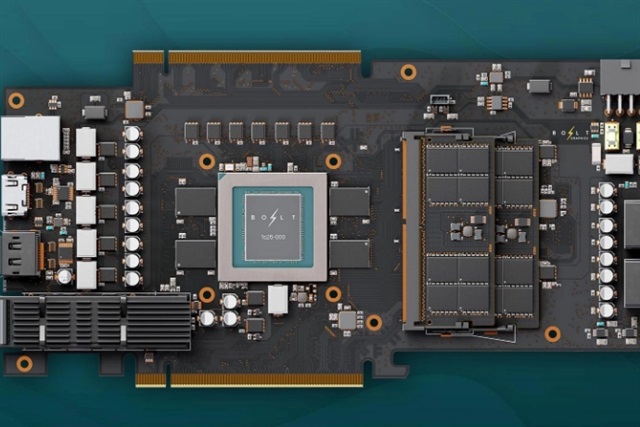
Bolt Graphics seeks $100 million to challenge Nvidia and AMD with the Zeus GPU
Bolt Graphics is seeking $100 million to develop Zeus, a GPU aimed at competing with Nvidia and AMD beyond AI workloads. The source includes no...
PRISM: privileged information for multi-agent topology design
PRISM recovers per-query signal from execution-verified graph corpora that lack rankings. A teacher reads a sibling graph via a zero-initialized...
DeepUnfolding Agent: Adaptive Control Becomes an External Service
The FastAPI platform described by DeepUnfolding Agent separates adaptive control from domain-specific execution. Executors register a schema, send...
Saturated Benchmarks Still Hold Signal in Model Transcripts
When several models reach near-perfect scores, benchmarks lose their ability to differentiate them. A study shows that full task transcripts from...
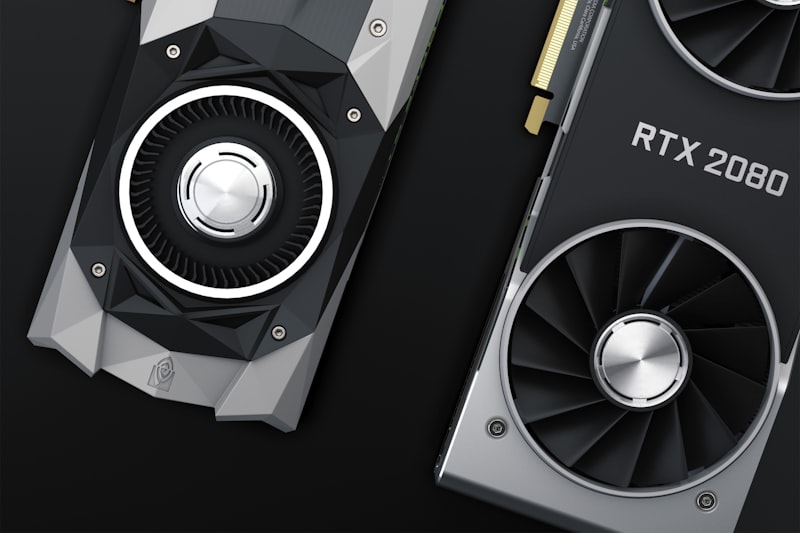
DeepSeek-V4-Flash on 4x Radeon AI PRO R9700: the 79 tok/s configuration that finally works
A real-world test shows affinity handles four Radeon AI PRO R9700 cards without degenerate output. The 2.875 bpw quant keeps 11,008 experts in...

Meta Opens Weights for Muse Spark Open: 816B Parameters and a 1M Token Context
Meta releases the weights for Muse Spark Open, a model with 816B total and 42B active parameters and a 1M-token context window. The announcement...
Nemotron 3.5 Bolt: A 74B VLM Compressed to 24GB for On-Premise
NVIDIA positions Nemotron 3.5 Bolt as a vision-language model for everyday agentic tasks running locally: 74B total parameters, 9B active, native...
GNOME Mutter Improves Damage Tracking for Secondary GPU Copy Buffers
A change in the GNOME 52 compositor reduces unnecessary buffer copies between GPUs on hybrid laptops. Less wasted bandwidth and battery, with an...
Microsoft's local 137B-parameter MoE model and the on-premise coding push
Microsoft AI has developed a local version of MAI Code 1.1 Flash, a coding-optimized mixture-of-experts model with 137 billion total and 6.8...
Mr.Chatterbox-2.7B-Chat: an LLM trained from scratch on Victorian texts
Presented in the community by u/centerstate, Mr.Chatterbox-2.7B-Chat is a checkpoint both pre-trained and fine-tuned on Victorian texts for...

AMD W7900 and LFM2.5: A Concrete Signal for On-Premise LLM
A 24-billion-parameter LLM tested on an AMD W7900 with a 128,000-token context and sustained speed around 95 tokens per second signals that...