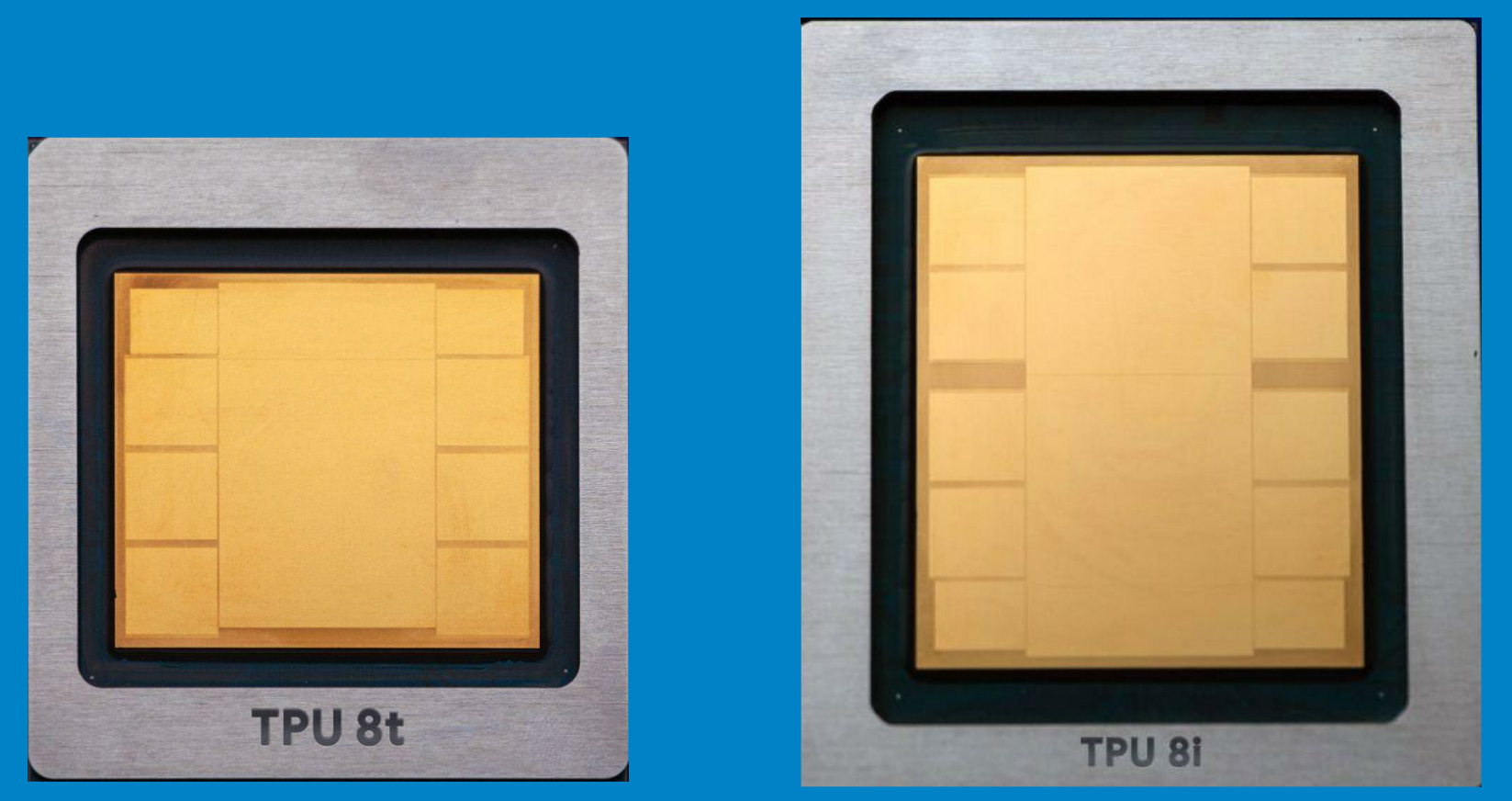
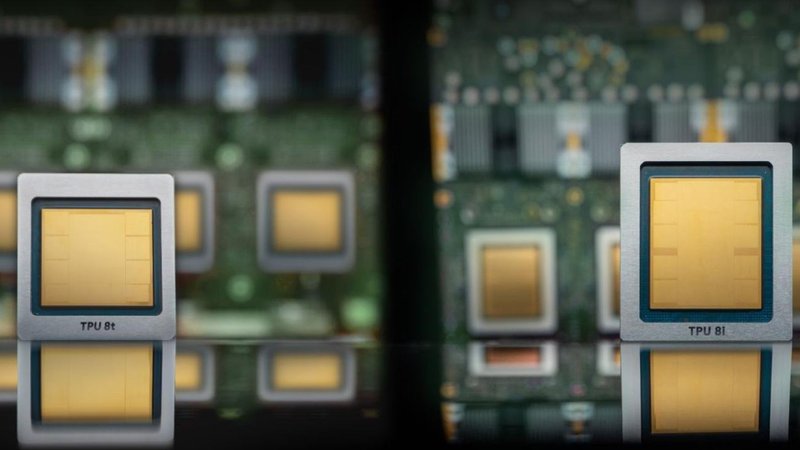
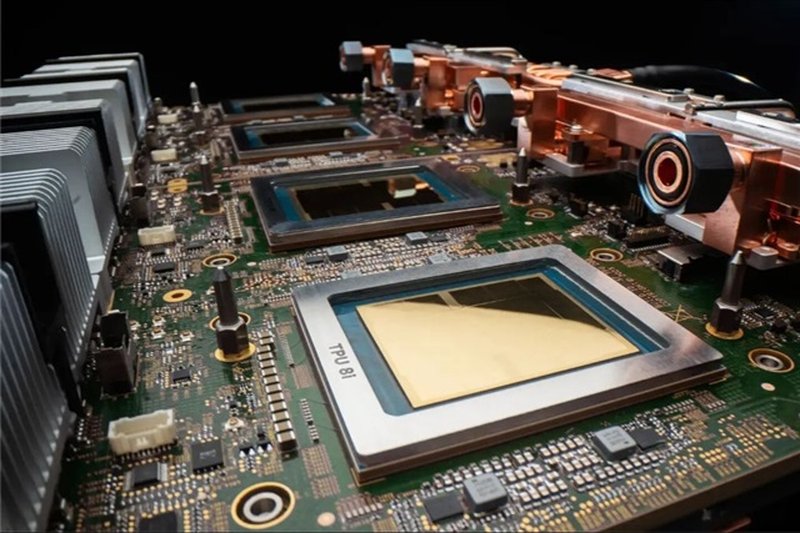
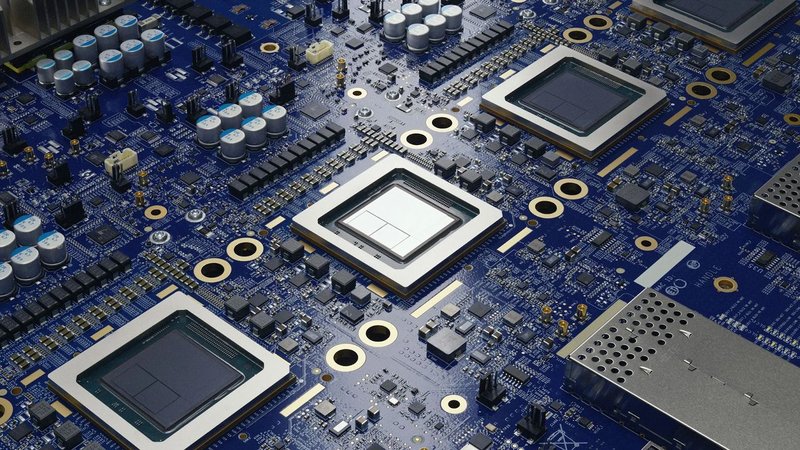
Google brought its eighth-generation TPU family to Hot Chips 2026, split into two distinct chips: the TPU 8t for training and the TPU 8i for inference. The separation of workloads is not a surprise for close observers, but the fact that a hyperscaler keeps investing in proprietary hardware for both stages signals how much AI competition has moved from the model layer to the silicon layer.
The dual-track approach has a clear logic. Training demands high parallel compute capacity and sustained throughput, while inference must optimize latency, cost per token, and energy consumption. Designing two distinct accelerators avoids the compromises that a single general-purpose chip would impose. Google is not the only hyperscaler moving in this direction, but its path is closely watched because it combines hardware control with a proprietary software stack.
For the market, this evolution creates second-order implications. On one side, it reduces Google's exposure to external accelerator suppliers and can lead to greater predictability in cost and supply. On the other, it makes Google's cloud offering more differentiated: anyone who wants access to those chips must go through its platform. This creates an incentive to move workloads to the cloud and, at the same time, raises questions for those who prefer to keep data and workloads in-house.
The point directly affects deployment decisions. A specialized accelerator like the TPU is not available as a generic component for on-premise racks; it is a competitive advantage tied to Google's infrastructure. Companies pushing self-hosted stacks and local LLMs must therefore confront a trade-off: use more flexible commercial hardware that may be less optimized for certain workloads, or accept the lock-in of a specific cloud. It is not only a matter of performance, but of data sovereignty and overall TCO.
For those evaluating these scenarios, AI-RADAR provides analytical frameworks on /llm-onpremise to weigh trade-offs between cloud and on-premise, without forcing a single answer.
The Hot Chips 2026 presentation does not yet offer benchmark numbers or details on VRAM and memory bandwidth. But the structural message is already clear: the separation between training chips and inference chips is becoming a central element in the strategy of large cloud operators. The next front will not be only which model runs, but on which silicon it runs.



💬 Comments (0)
🔒 Log in or register to comment on articles.
No comments yet. Be the first to comment!