Nvidia’s next-generation consumer graphics cards, the RTX 50 series built on the Blackwell architecture, are set to be more expensive than current models. The reason isn’t just the usual supply-demand dynamics, but a structural rise in production costs: on one side, the wafers from TSMC, the Taiwanese foundry giant; on the other, ever-more-sophisticated and costly HBM memory modules. The scenario, reported by DIGITIMES, has implications that stretch far beyond the gaming world.
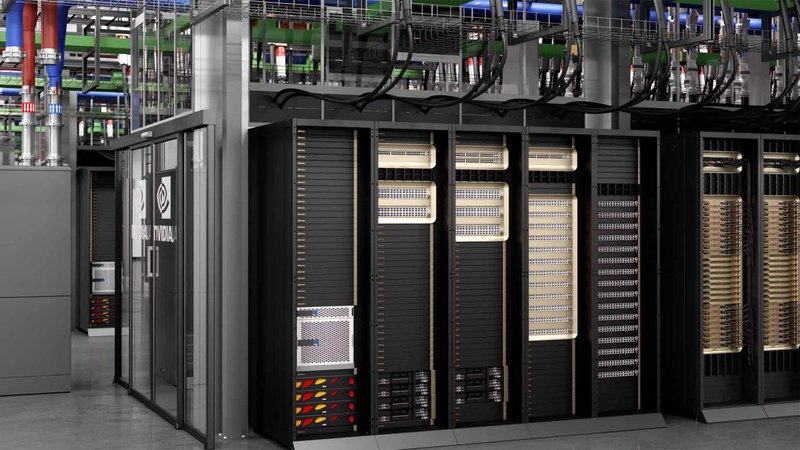
The immediate effect is a list-price hike that threatens to widen the gap between those who can afford ever-more-performant hardware and those constrained by tight budgets. But the most interesting angle for on-premises LLM deployments is that hardware cost trajectories are accelerating in a non-linear way. It’s not entirely new: every generational leap brings a jump. The difference today is that foundries like TSMC face unprecedented development and capacity costs, while HBM memories require advanced packaging processes that drive up the cost per gigabyte. The result is a multiplier that hits not only data-center GPUs like the H100 or B200, but also consumer cards often repurposed for self-hosted inference of medium-sized LLMs.
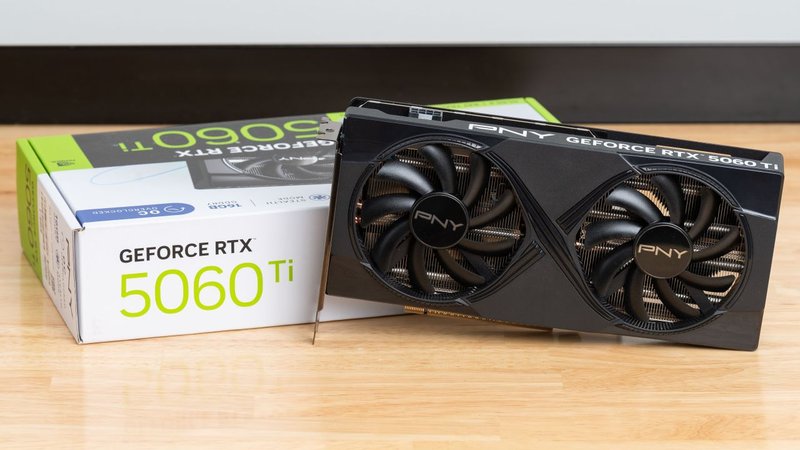
For anyone managing an on-premises fleet, this means TCO (Total Cost of Ownership) calculations must be revised upward. If a card like the RTX 4090 is often chosen for inference because it offers a good VRAM-to-price ratio, the arrival of its successors with steeper price tags could make single-GPU purchases less attractive, tilting the balance toward more complex multi-GPU setups or cloud solutions. At the same time, pressure grows on the whole ecosystem of tools that help squeeze more performance out of available hardware: 4-bit or 8-bit quantization, optimized serving frameworks, and more efficient preprocessing pipelines are no longer optional but essential levers to contain costs.
There’s a structural signal here that shouldn’t be ignored. The semiconductor industry is internalizing the difficulty of scaling to ever-smaller nodes (3 nm and beyond) and of integrating high-bandwidth memory. GPU makers pass these costs on to customers, but demand elasticity isn’t infinite. In the enterprise world, AI hype might buy a few quarters of growth, but over the long term, rising hardware costs risk slowing down the very widespread adoption the industry wants to achieve. For teams evaluating whether to build an on-premises inference cluster, the question isn’t just “how much does the hardware cost”, but “how much does not optimizing software cost me”. And with each new GPU generation, that answer gets sharper.
On reflection, the price increase on consumer cards could accelerate an existing trend: the move toward smaller, specialized models capable of running on less extreme hardware. It’s no coincidence that fine-tuning of compact LLMs is gaining traction: a 7-billion-parameter model in FP16 can be served on a single mid-range GPU, while a larger model would require multiple cards and significantly more power. In this scenario, the upward spiral of hardware prices risks turning into an unintended incentive to rethink AI approaches, favoring efficiency and data sovereignty over raw compute. Those who read the signals and invest in agile deployment software and methodologies could emerge with a real competitive edge.






💬 Comments (0)
🔒 Log in or register to comment on articles.
No comments yet. Be the first to comment!