Weekly Digest

๐Ÿ“– AI-Radar ยท 2026-W40

28 September โ€“ 04 October 2026  ยท  60 articles published

๐Ÿ“ Altro 10

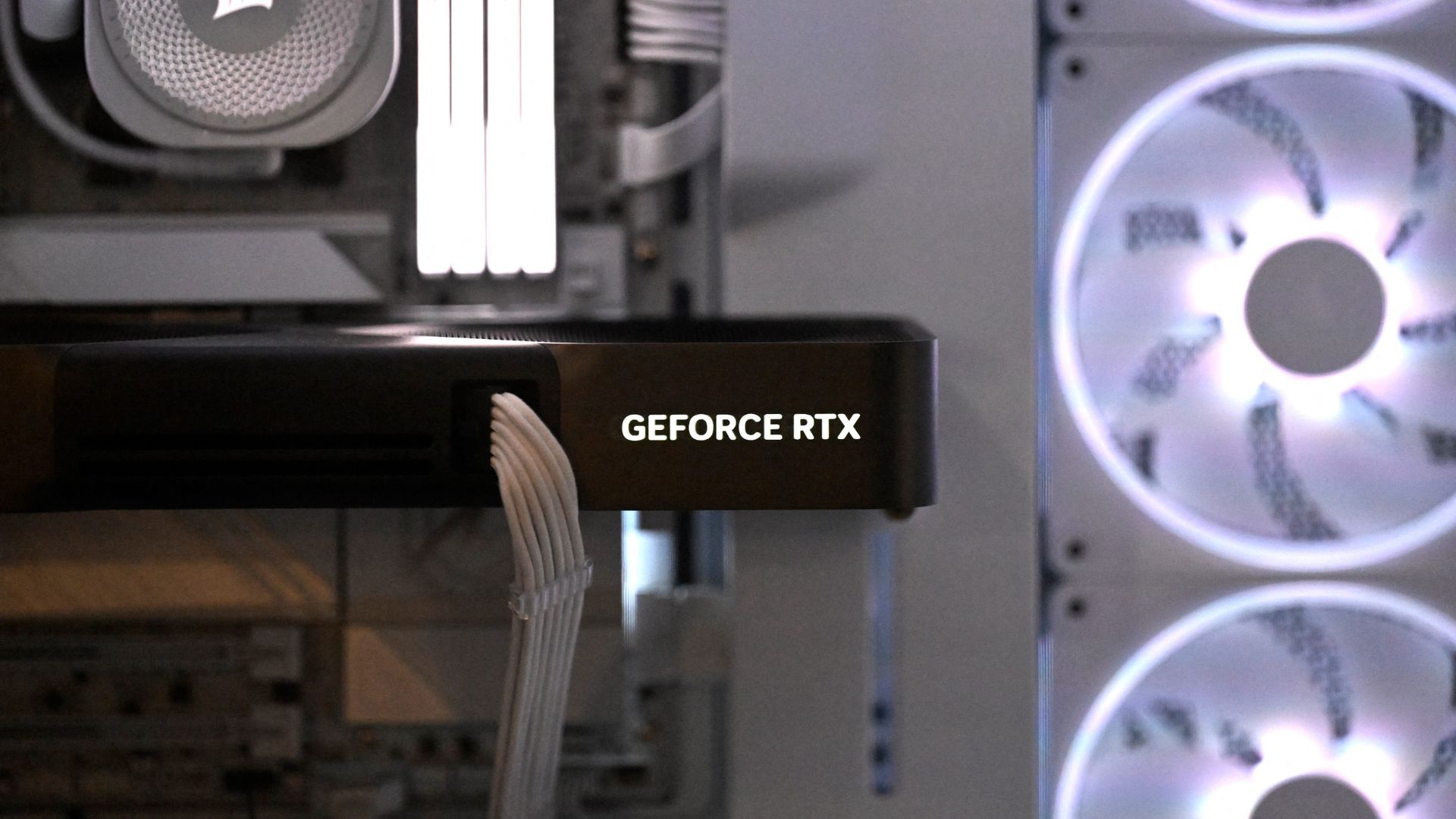
Two DGX Sparks at home: GLM 5.3 Flash runs locally at interactive speeds

Two DGX Sparks at home: GLM 5.3 Flash runs locally at interactive speeds

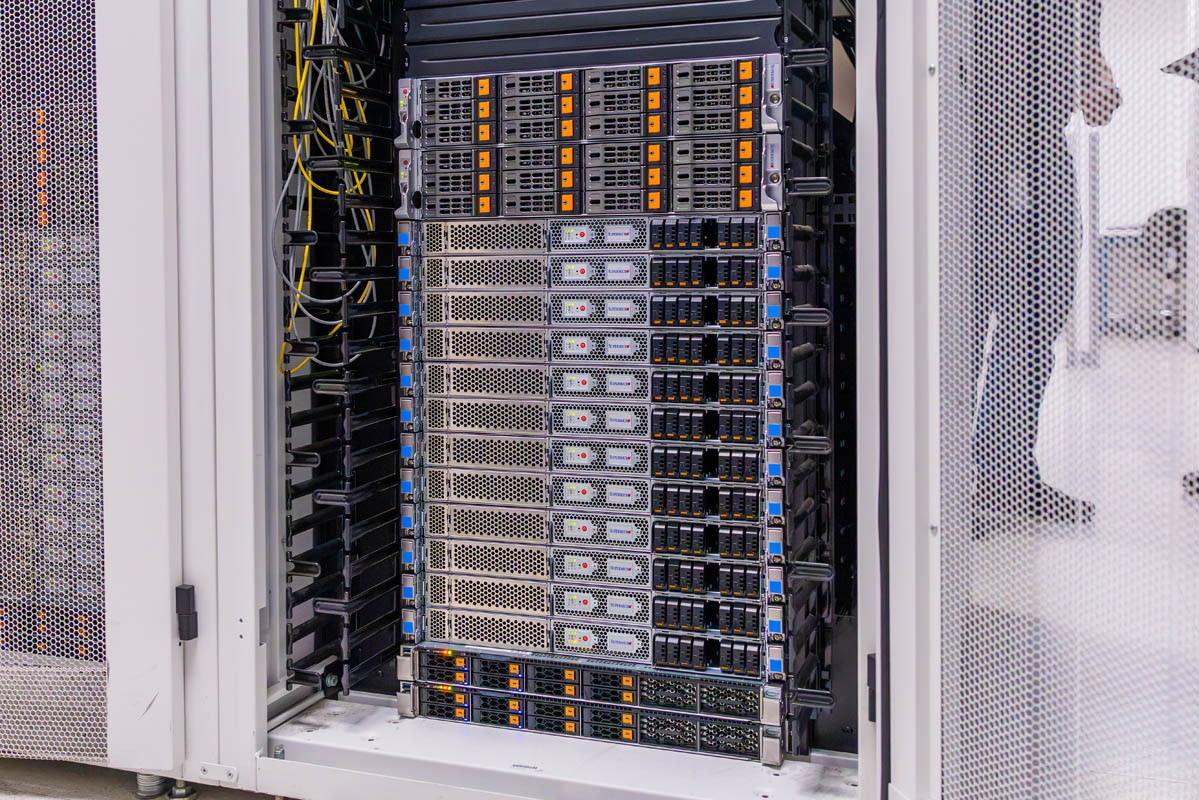
A user assembled a fully local inference setup with GLM 5.3 Flash on two DGX Sparks, running vLLM with two-way tensor parallelism. Reported figures: prefill at about 1,500 tokens/s and decode at about 40 tokens/s with a 100k-token context. Claude Code serves as the scaffold with a 260k-token context. Coding, vision, and 3D understanding impress; the author calls it 'good enough' at home.

04 Oct #Hardware #LLM On-Premise #DevOps
Google freezes open source bug bounty program over AI slop surge

Google freezes open source bug bounty program over AI slop surge

Google's decision to pause its open source bug bounty program highlights a structural problem: LLM-generated reports increase noise and verification costs, eroding trust in the process. Human researchers lose visibility, and maintainers receive fewer useful submissions. For teams running self-hosted stacks on open source components, the move signals a concrete risk in the ability to identify real vulnerabilities.

04 Oct #LLM On-Premise #DevOps
A 286 Tandy as an AI terminal: local Qwen and Krea on RTX GPUs

A 286 Tandy as an AI terminal: local Qwen and Krea on RTX GPUs

The DeskMind project turns a Tandy 1000 TL/3 with a 286 processor into a thin client for a local server. The 286 never sees JSON, base64, or PNG: it gets plain text and images ready for video memory. The server runs Qwen3.8-27B on an RTX 5090 and Krea 2 on an RTX 4090. A logo request takes about 9 seconds. The system applies dithering and code page 437 for the 16-colour display.

01 Oct #Hardware #LLM On-Premise #DevOps

๐Ÿ“ LLM 14

AliceAI-80B-A3B: local fine-tuning stumbles on data, not on V100s

AliceAI-80B-A3B: local fine-tuning stumbles on data, not on V100s

A local fine-tuning project for AliceAI-80B-A3B shows the limits of on-premise training: 5 million synthetic tokens are not enough for a general conversational model. On three 32GB V100s, checkpoint 1.0 alpha responds but is underfit; the creator accelerates the synthetic generator from 80 to 240 tokens per second and prepares a second, broader dataset. No release of the first checkpoint, but sftmill is open source.

04 Oct #Hardware #LLM On-Premise #Fine-Tuning
FrogNano-4B: An agentic model for the GPU poor

FrogNano-4B: An agentic model for the GPU poor

Microsoft has released a 4-billion-parameter model derived from Qwen3.5-4B, trained with reinforcement learning on synthetic SWE environments for agentic software engineering. The approach without behavioral distillation aims to reduce dependence on expensive hardware, but introduces concrete risks: incorrect or insecure patches even when tests pass.

03 Oct #Hardware #LLM On-Premise #DevOps
Qwen3.8-27B-Humanlike-Chat 2.0: Human Tone Now Meets Tool Calls and Instruction Following

Qwen3.8-27B-Humanlike-Chat 2.0: Human Tone Now Meets Tool Calls and Instruction Following

The second version of the Qwen3.8-27B-Humanlike-Chat LoRA fixes the v1 shortcomings: tool calls now work, the model asks for missing details, and it follows instructions without losing its human texting tone. Training uses on-policy distillation with two teachers. Benchmarks show gains on When2Call and BFCL, with slightly lower knowledge scores. Quantized GGUFs are available.

02 Oct #Hardware #LLM On-Premise #Fine-Tuning
AREX-2: Self-improving LLM agents through long-horizon reflection

AREX-2: Self-improving LLM agents through long-horizon reflection

AREX-2 explores self-improvement in LLM agents through reflection and long-horizon iterations. Trained on synthetic trajectories from machine learning and algorithmic programming tasks, built on Qwen3.8-27B, it achieves 81.8 on MLE-bench Lite and 70.7 on Frontier-CS, with transfer to research benchmarks including BrowseComp, HLE, GAIA, and DeepSearchQA. Results improve as the round budget grows.

01 Oct #Hardware #LLM On-Premise #DevOps
Google unveils Gemini 4 Argon: benchmark leader, but no public access yet

Google unveils Gemini 4 Argon: benchmark leader, but no public access yet

Google announces Gemini 4 Argon, a frontier model with leading performance in coding, knowledge work, and cybersecurity. External access is not yet available: Argon is already in internal use, reportedly saving 300 TiB of memory and migrating more than 800,000 lines of C/C++ code to Rust in the Zircon kernel. DeepSWE v1.1 reaches 77.9%, ahead of GPT-6 Astra, Fable 5.1, and Opus 5.5.

30 Sep #LLM On-Premise #DevOps
Ling-3.1-flash: 560B parameters, 25B active, 1M-token context

Ling-3.1-flash: 560B parameters, 25B active, 1M-token context

As reported, Ling-3.1-flash combines 560 billion total parameters, 25 billion active per token, and a context window up to one million tokens, with a two-week free trial and then an open-source release. The profile points to a sparse architecture: lower per-token compute, but memory still tied to the full checkpoint. A key constraint for teams evaluating self-hosted deployment and data sovereignty.

30 Sep #Hardware #LLM On-Premise #DevOps
Fine-tuning beyond text: DASA turns gradients into the dataset

Fine-tuning beyond text: DASA turns gradients into the dataset

DASA uses activation gradients from a frozen reference model to produce synthetic embeddings, fine-tuning LLMs without readable text. Tests on Llama and Qwen show performance similar to or better than natural language data, with up to 4.9x speedup over GRADMM. For self-hosted deployments, the balance shifts among data curation, compute, portability, and audit.

30 Sep

๐Ÿ“ Hardware 10

Linux 7.4 to Support the NPU on AMD Ryzen AI Max 400 Series 'Gorgon Halo'

Linux 7.4 to Support the NPU on AMD Ryzen AI Max 400 Series 'Gorgon Halo'

The Ryzen AI Max 400 'Gorgon Halo' series is nearing market, but Linux support for its NPU has lagged. A simple enablement patch is expected to land in kernel 7.4. For those evaluating local and self-hosted inference, the delay signals a structural issue: hardware ready, upstream software stack trailing. The analysis looks at constraints, incentives, and who benefits from an NPU visible to Linux.

30 Sep #Hardware #LLM On-Premise #DevOps

๐Ÿ“ Frameworks 22

The Rise of Overfit Inference Engines

The Rise of Overfit Inference Engines

Ultra-specialized runtimes like Strata and ninfer give up the generality of llama.cpp and vLLM to optimize a few models and one hardware family. The bet: maximum output from fixed local configurations, even at the cost of disposable code. For self-hosted and data sovereignty, fragmentation can become a competitive advantage.

03 Oct #Hardware #LLM On-Premise #DevOps
llama.cpp halves indexer score memory for Qwen Flash Next

llama.cpp halves indexer score memory for Qwen Flash Next

A pull request in the llama.cpp repository introduces an optimization that halves the indexer score memory for Qwen Flash Next. The change, reported on Reddit, results in lower VRAM usage during inference. For on-premise and self-hosted deployments, where GPU memory is often the main constraint, such interventions lower the hardware barrier and make local model execution more sustainable.

03 Oct #Hardware #LLM On-Premise
Helion in vLLM: GEMM tuning becomes search, not GPU craft

Helion in vLLM: GEMM tuning becomes search, not GPU craft

Helion's linear backend in vLLM shows a single GEMM kernel with an ahead-of-time autotuner can cover specialized variants and improve inference by up to 10% on Qwen3. For self-hosted LLM teams, the signal is twofold: less dependence on deep CUDA skills, but the cost shifts to offline tuning and configuration governance.

03 Oct
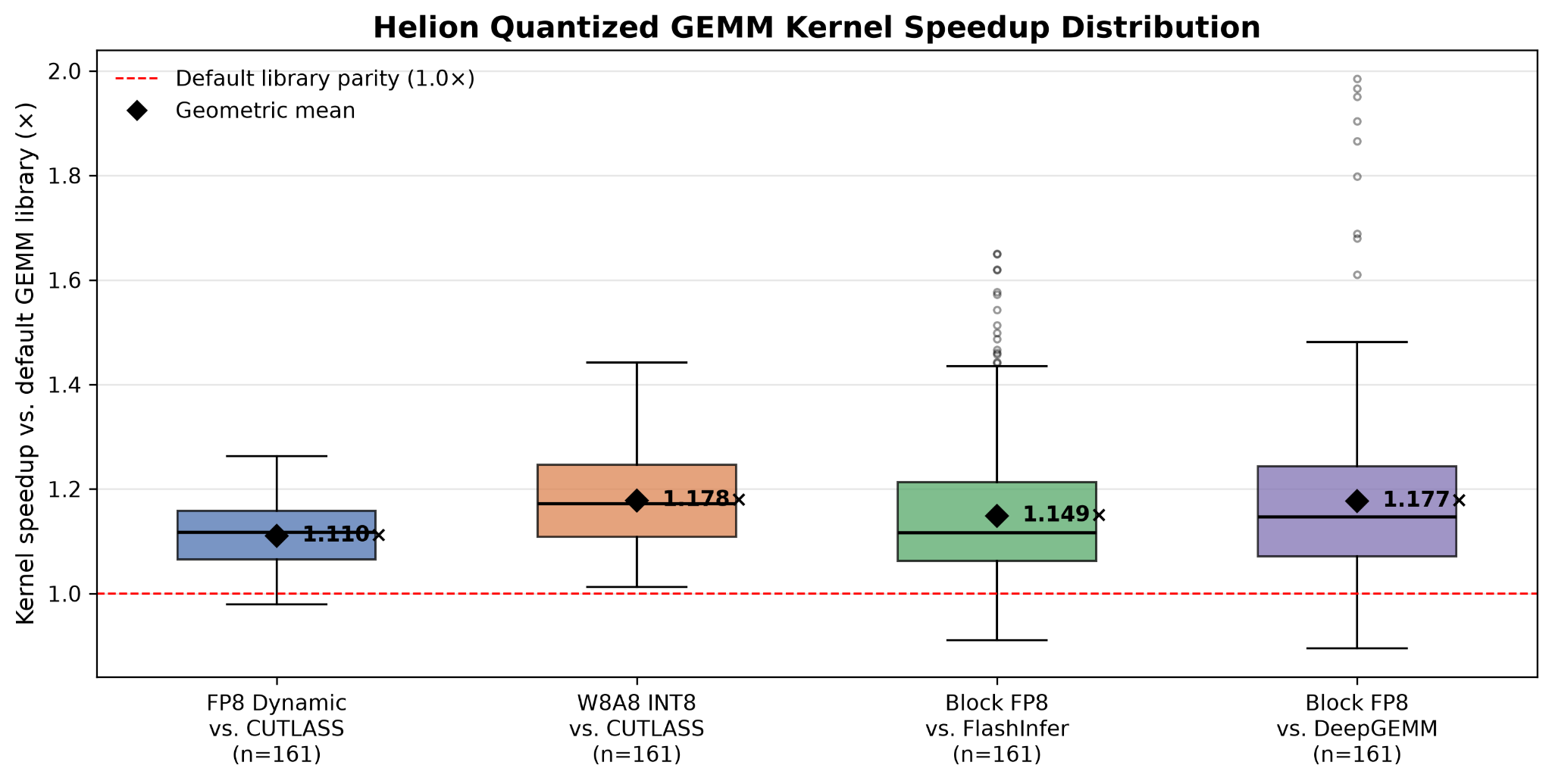
Helion in vLLM's linear backend: one GEMM, per-shape tuning, up to 10% throughput gains

Helion in vLLM's linear backend: one GEMM, per-shape tuning, up to 10% throughput gains

Red Hat and Meta integrated Helion into vLLM's linear backend. A single GEMM implementation covers Standard, Split-K, and Swap-AB variants, with per-shape autotuning on NVIDIA Hopper GPUs. On H100 tests, quantized kernels outperform CUTLASS, FlashInfer, and DeepGEMM, with end-to-end throughput gains above 10% in some workloads. The trade-off is ahead-of-time tuning effort and config maintenance, pushing a hybrid adoption model.

02 Oct #Hardware #LLM On-Premise #Fine-Tuning
PyTorch Certification Turns Into a Structured Operational Pathway

PyTorch Certification Turns Into a Structured Operational Pathway

Linux Foundation Education has launched a pathway that combines four self-paced modules with the PyTorch Certified Associate exam. Estimated at 15โ€“17 hours, it covers tensors and devices, data handling, neural network development, and optimization with torch.compile, Automatic Mixed Precision, and the PyTorch Profiler. It is aimed at early-stage practitioners with Python and machine learning experience who want a structured foundation before moving into production.

02 Oct #Hardware #LLM On-Premise #Fine-Tuning
llama.cpp adds Decision Models: local inference shifts gear

llama.cpp adds Decision Models: local inference shifts gear

The llama.cpp project has announced a new feature called Decision Models, signaling an expansion beyond pure text generation. For those running Large Language Models locally, the move suggests a maturation toward more actionable outputs, with implications for operational autonomy, data sovereignty, and TCO. The article analyzes what this means for self-hosted stacks and why the C++ framework remains a benchmark for on-premise inference.

02 Oct #Hardware #LLM On-Premise #DevOps
Causal World Models for Modular LLM Agents: The Graph Is Not Enough

Causal World Models for Modular LLM Agents: The Graph Is Not Enough

Observational world models are not enough for modular LLM agents: a sequence does not say whether payment authorizes shipment or a hidden factor explains both. The FedCausalCompose framework shows that interventional error decreases with intervention responses and that causal interfaces help mostly with structured APIs; dialogue and narrative settings ignore them without a short attention anchor. Signal: statistical identifiability alone is not enough, a usable form at action time is required.

02 Oct #LLM On-Premise #DevOps
RAG on FRAMES: 18 pipelines beaten by an agent loop. Reranker under scrutiny

RAG on FRAMES: 18 pipelines beaten by an agent loop. Reranker under scrutiny

A benchmark on 824 multi-hop questions from FRAMES compares 18 RAG pipelines with an agent loop. The best pipeline reaches 78.9%, the agent 92.7%. The most awkward result concerns reranking: a small model drops accuracy by 9 points, a large one barely helps. Models also fill gaps from memory, citing documents they never read. Anyone designing RAG stacks needs end-to-end verification and citation checks.

01 Oct #LLM On-Premise #Fine-Tuning #RAG
Qt Creator 21 Beta Turns AI On by Default for C++ and Python Developers

Qt Creator 21 Beta Turns AI On by Default for C++ and Python Developers

Qt Creator 21 beta makes AI integration more visible in the IDE for C++, Python and JavaScript. The shift to default-enabled features signals a normalization of automated assistance in the development cycle. For teams working in self-hosted environments, the change moves attention from whether to add AI to how to govern it. The source gives no details on models or endpoints, but the default itself is a structural signal.

01 Oct #LLM On-Premise
KDE turns 30: Plasma 6.8 shuts down the X11 session

KDE turns 30: Plasma 6.8 shuts down the X11 session

Plasma 6.8, expected on October 14, is the first KDE release without a native X11 desktop session: it runs on Wayland, with XWayland for legacy apps. The beta advances the Oxygen theme and Union engine, while Klassik recreates KDE 3 on Qt 6. Meanwhile Trinity, Sonic, MiDesktop and Katana preserve older versions, signaling demand for control and compatibility beyond nostalgia.

30 Sep #LLM On-Premise #DevOps
Sieve and Sage: separating noise from absence of evidence in RALMs

Sieve and Sage: separating noise from absence of evidence in RALMs

A framework splits retrieval failures into two states: unanswerable and distracted. A lightweight module, Sieve, filters noisy documents before invoking the costly LLM, Sage. In tests, accuracy improves by up to 69.4 percentage points and Macro-F1 by 55.2 points compared to one-stage baselines, with up to 1.99x speedup. For on-premise pipelines, fewer expensive inference calls and more control over TCO.

30 Sep #LLM On-Premise #DevOps #RAG

๐Ÿ“ Market 2

US Arrests Tech CEO in $300M Nvidia Chip Smuggling Case

US Arrests Tech CEO in $300M Nvidia Chip Smuggling Case

The US Department of Justice has arrested Earthmade Computer CEO Greg Lui, accused of smuggling Nvidia A100 and H100 server chips worth over $300 million into China using false paperwork and transit through Malaysia and Singapore. The chips, while not the newest, can train Large Language Models. The case shows how export controls push AI computing into opaque supply chains.

02 Oct #Hardware #LLM On-Premise #DevOps

๐Ÿ“ OnPremise 1

BIG-IP Next for Kubernetes: AI Efficiency Shifts from GPU to Network

BIG-IP Next for Kubernetes: AI Efficiency Shifts from GPU to Network

F5's test on BIG-IP Next for Kubernetes shows that the same GPU cluster can deliver more than triple the performance by tuning traffic balancing and routing. For on-premise deployments, node-level efficiency becomes central to TCO; the risk is coupling optimization to a proprietary stack. AI-RADAR analyzes implications for local infrastructure teams, between unused capacity and technical dependency.

02 Oct

๐Ÿ“ General 1

โ† 2026-W39 All news 2026-W41 โ†’