Weekly Digest

๐Ÿ“– AI-Radar ยท 2026-W41

05 October โ€“ 11 October 2026  ยท  60 articles published

๐Ÿ“ LLM 17

What Actually Runs on 10-16GB VRAM: A Field Ranking of Local LLMs

What Actually Runs on 10-16GB VRAM: A Field Ranking of Local LLMs

A community ranking evaluates LLMs that can run on consumer GPUs with 10-16GB of VRAM and 26-32GB of RAM. The criteria include minimum 10 tokens/s, narrative coherence, handling of typos and nuance, and frequency of slop patterns. The results highlight practical constraints for self-hosted inference: architecture choices, quantization, and loader support matter as much as raw VRAM. A knowledge test also suggests that media-specific information only appears reliably in models above 200B parameters.

11 Oct #Hardware #LLM On-Premise #DevOps
Vega, an open-source 800M parameter decision model with 73k token context

Vega, an open-source 800M parameter decision model with 73k token context

Nandakishor M. has released Vega, a physics-based typed decision model with 800 million parameters (a 4B variant is available), support for 73,000 tokens and images, and single-shot results that surpass many JEV benchmarks. The Test-Time Training architecture extracts vectors from hidden layers and simulates a ball rolling between outcome valleys, offering interpretable decisions for tasks such as injection detection.

10 Oct #Hardware #LLM On-Premise #Fine-Tuning
Freezing the Decoder, Healing the Encoder: The Shared Learning Rate Trap

Freezing the Decoder, Healing the Encoder: The Shared Learning Rate Trap

A shared learning rate can manufacture false advantages when comparing fine-tuning recipes with different parameter counts. In SVD-based KV-cache compression, healing only the encoder appeared superior, but with per-arm learning rates it reaches parity while keeping 3x fewer trainable parameters and 3x less optimizer memory. The result is a methodological warning for evaluating parameter-efficient methods.

09 Oct #Hardware #LLM On-Premise #Fine-Tuning
LittleBit and the race toward ultra-low-bit quantization for tiny models

LittleBit and the race toward ultra-low-bit quantization for tiny models

An arXiv preprint describes LittleBit, an ultra-low-bit quantization approach based on latent factorization and quantization-aware training for very small models. The news matters for on-premise LLM operators: it is not just about saving space, but about moving inference to hardware with less VRAM. Tooling and runtime issues remain open, because aggressive compression requires formats and operators not always available in local frameworks.

08 Oct #Hardware #LLM On-Premise #Fine-Tuning
Hirundo removes CCP alignment from Qwen, cutting censorship to 2.8%

Hirundo removes CCP alignment from Qwen, cutting censorship to 2.8%

Hirundo has released westernized versions of Qwen3.6-35B-A3B and Qwen3.5-4B, using machine unlearning to remove CCP political alignment from the weights. On the internal CCPC-500 benchmark, censorship drops from 89.8% to 2.8% for the 35B model; independent DECCP and ChinaBench benchmarks show similar declines. General capabilities shift by an average of 0.72 points. Limits remain: 2.8% is not zero and CCPC-500 is not yet public.

08 Oct #LLM On-Premise #Fine-Tuning #DevOps
Child ASR adaptation: tuning without forgetting adults

Child ASR adaptation: tuning without forgetting adults

A study on Arabic and English compares full fine-tuning, LoRA, and weight-space merging for adapting speech recognizers to child speech. Adaptation is necessary, but direct fine-tuning degrades adult performance. Bilingual adaptation is more stable and merging improves the trade-offโ€”LERP favors adult retention, TIES recovers child gains.

08 Oct #LLM On-Premise #Fine-Tuning
AI Rewrites Photoshop and Premiere in Rust: ArtCraft Challenges Adobe

AI Rewrites Photoshop and Premiere in Rust: ArtCraft Challenges Adobe

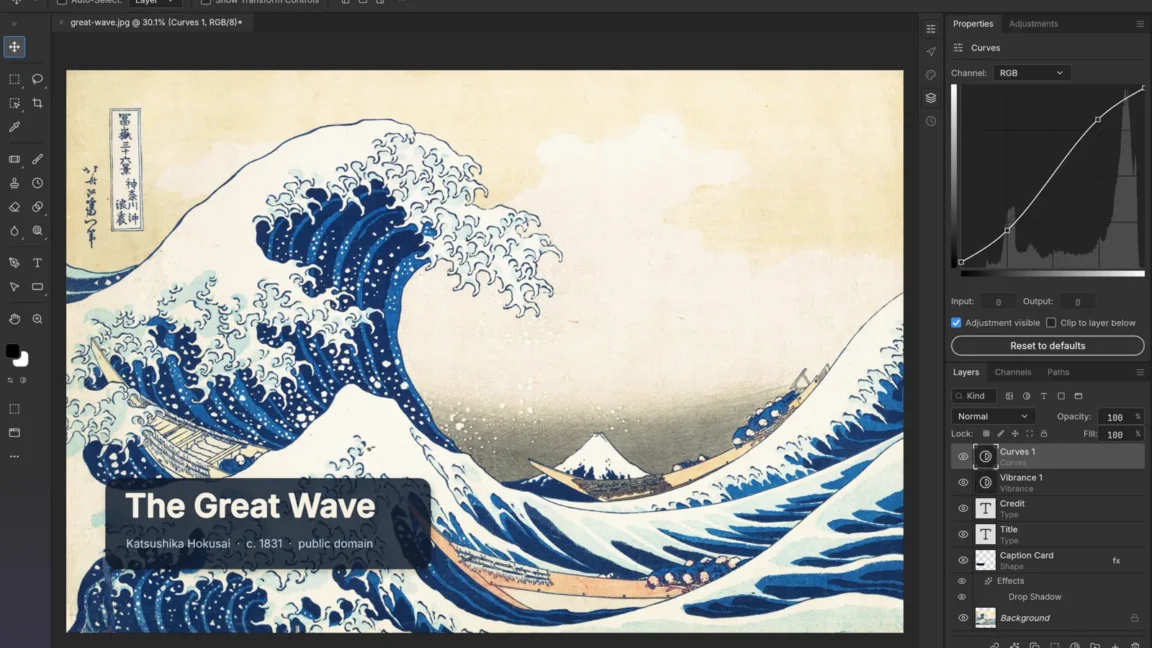
The ArtCraft project used Claude Code and AI agents to produce open-source clean-room reimplementations of Photoshop, Premiere and Lightroom in Rust. The initiative demonstrates AI's ability to generate complex software but raises legal questions about possible contamination with proprietary code. For those evaluating local alternatives to Creative Cloud, it is a signal to watch, not yet a ready tool.

08 Oct #LLM On-Premise #DevOps

๐Ÿ“ Hardware 9

Counterfeit RTX 4090s: the hardware gap in self-hosted inference

Counterfeit RTX 4090s: the hardware gap in self-hosted inference

Counterfeit RTX 4090s that are almost indistinguishable from genuine parts during visual inspection and initial software tests are turning consumer GPU purchases for on-premise LLM inference into a structural risk. The damage goes beyond replacement costs: it includes instability under sustained load, unreliable benchmarks and a higher TCO. For self-hosted and data-sovereign deployments, hardware provenance becomes an infrastructure skill, not just a logistics detail.

11 Oct
Nvidia reportedly halts GeForce RTX 5090 production to prioritize AI data center GPUs

Nvidia reportedly halts GeForce RTX 5090 production to prioritize AI data center GPUs

According to reports, Nvidia has suspended production of the GeForce RTX 5090 to focus capacity on AI data center and professional GPUs. The move signals a clear industrial priority: accelerated computing margins outweigh gaming margins. For self-hosted LLM inference, the reduced availability of high-VRAM consumer cards narrows affordable options and pushes toward enterprise hardware, with implications for TCO and supply.

10 Oct #Hardware #LLM On-Premise #Fine-Tuning
Vulkan and RADV: Valve Extends the Life of AMD Polaris GPUs on Linux

Vulkan and RADV: Valve Extends the Life of AMD Polaris GPUs on Linux

Valve's Linux graphics team, led by Timur Kristรณf, continues work on open-source drivers for older AMD GPUs. After migrating GCN 1.0/1.1 architectures to the AMDGPU kernel driver, the focus now shifts to improving RADV Vulkan support for Radeon RX 400/500 Polaris cards. It's a signal for low-cost local hardware: driver maintenance extends operational life and reduces TCO, without turning these cards into modern AI accelerators.

06 Oct #Hardware #LLM On-Premise #Fine-Tuning

๐Ÿ“ Altro 17

DigUp brings EmbeddingGemma 2 to the Mac for local multimodal search

DigUp brings EmbeddingGemma 2 to the Mac for local multimodal search

DigUp is a free, open-source Mac app that runs EmbeddingGemma 2 locally to search files by content. The 865 MB Q8_0 GGUF model runs on Apple Silicon through llama.cpp and Metal; search loads only the 250 MB text encoder and responds in about a tenth of a second. It handles text, images, audio, video, code, and multilingual queries, going online only for the model download and an optional update check.

10 Oct #LLM On-Premise #DevOps
Nvidia defends open-source AI security alliance as hundreds of companies await vetting

Nvidia defends open-source AI security alliance as hundreds of companies await vetting

Nvidia defended the Open Secure AI Alliance, now run by the Linux Foundation and launched days after the Hugging Face incident. Mark Weatherford addressed doubts about member commitment and explained OpenAI's absence: hundreds of companies are still in the vetting queue. The article examines the structural weight of the admission process for open-source AI governance and for teams evaluating self-hosted deployments.

09 Oct #Hardware #LLM On-Premise #DevOps
Diffu-LoRA: Fine-Tuning That Allocates Parameters Where Needed

Diffu-LoRA: Fine-Tuning That Allocates Parameters Where Needed

Diffu-LoRA introduces trainable low-rank components with learnable gates in the Transformer blocks of diffusion models. Bilevel optimization updates weights and gates on separate splits, while progressive pruning removes components with the lowest gate values. The backbone stays frozen. Tests with Stable Diffusion and DreamBooth show better subject fidelity and prompt alignment than fine-tuning baselines.

09 Oct #Hardware #LLM On-Premise #Fine-Tuning
TEMPEST: Angular Embeddings for Scalable Driver Identification Without Retraining

TEMPEST: Angular Embeddings for Scalable Driver Identification Without Retraining

TEMPEST uses a Temporal Convolutional Network with ArcFace loss to produce angular embeddings from 60-second multimodal driving windows. On 45 drivers it reaches 91.71% Rank-1 accuracy, outperforming the best classical model by 17.9 points and the strongest triplet-loss baseline by 58.4. With just 720K parameters and a 2.80 MB footprint, it enables dynamic enrollment without retraining. The work signals a practical path for behavioral driver identification in edge and on-premise deployments.

07 Oct #LLM On-Premise #Fine-Tuning #DevOps
LibreOffice turns 'no AI' into a feature: privacy as strategy

LibreOffice turns 'no AI' into a feature: privacy as strategy

LibreOffice's decision not to integrate AI features into its default configuration, citing user privacy, turns a refusal into a product positioning. For organizations handling sensitive documents, the absence of cloud processing is a concrete advantage. The move signals a split between AI-first suites and local-first tools, with implications for TCO, data sovereignty, and deployment decisions.

06 Oct #LLM On-Premise #DevOps
IRIS and Bpifrance back Vates with โ‚ฌ30M for global expansion

IRIS and Bpifrance back Vates with โ‚ฌ30M for global expansion

Vates has raised โ‚ฌ30 million from IRIS Growth and Bpifrance Large Venture. The capital will accelerate its open-source virtualization platform, with investments in performance, storage, security, automation, and large-scale infrastructure management, along with commercial expansion in North America and Europe. The move comes as the market seeks alternatives for control, sovereignty, and reversibility.

06 Oct #LLM On-Premise #Fine-Tuning #DevOps
MCP: trust between AI agents becomes an attack vector

MCP: trust between AI agents becomes an attack vector

Google and four other organizations have acknowledged vulnerabilities in which a compromised AI agent spreads malicious instructions to other internal agents by exploiting trust gaps in the Model Context Protocol. The technique is a form of prompt injection that targets the agent, not the LLM, and can lead to exfiltration of sensitive data.

05 Oct #LLM On-Premise #DevOps

๐Ÿ“ Market 2

GLM 5.3 Flash and Mistral Large 4: the overtake that shifts TCO

GLM 5.3 Flash and Mistral Large 4: the overtake that shifts TCO

Two open models lead the Artificial Analysis Cyber Index and outperform every single Anthropic model. The overtake is not just a ranking: it shifts the TCO calculation from API fees to on-premise infrastructure, reopening the debate on data sovereignty, quantization, and GPU management. AI-RADAR analyzes the implications for local deployments, fine-tuning, and self-hosted stacks, plus the ripple effects on cloud vendors and system integrators.

10 Oct
ArtCraft rewrites Office in Rust with Claude: WordCraft runs on Surface Arm

ArtCraft rewrites Office in Rust with Claude: WordCraft runs on Surface Arm

ArtCraft adds Word, Excel, and PowerPoint to its Rust applications, described as clean-room reimplementations. WordCraft runs on a Surface Arm and is estimated at 62 percent feature parity, but remains pre-alpha and untested for DOCX compatibility with real files. Development leans heavily on Claude. The legal question remains open, while Microsoft and Adobe have not commented.

08 Oct

๐Ÿ“ Frameworks 12

Synthesis Through Simulation: SAP's framework for schema-free enterprise data

Synthesis Through Simulation: SAP's framework for schema-free enterprise data

SAP has open-sourced Synthesis Through Simulation, a framework that generates synthetic enterprise data through interaction between LLM agents and APIs in simulated environments. The approach removes the need for database schemas, guaranteeing structural validity by construction. The Generalist Populator achieves an average marginal fidelity of 0.88 and 100% constraint satisfaction across ten environments. Relevant for those evaluating on-premise deployment and data sovereignty.

09 Oct #LLM On-Premise #Fine-Tuning #DevOps
Agent Lightning 1.0: a 3,500-line RL framework for training agents with real harnesses

Agent Lightning 1.0: a 3,500-line RL framework for training agents with real harnesses

Microsoft Research Asia has released Agent Lightning 1.0, a roughly 3,500-line RL framework that trains agents using the same harness deployed in production, eliminating the need to reimplement the agent inside the training framework. It runs on Kubernetes as standard jobs on self-managed clusters, cloud Kubernetes, or local infrastructure without commercial sandboxes. With about 6,000 samples, a Qwen3.5-9B coding pipeline improved SWE-bench Verified Pass@1 from 41.8% to 56.4%.

07 Oct #Hardware #LLM On-Premise #Fine-Tuning
External guidance in LLMs: bias cannot be eliminated, only calibrated

External guidance in LLMs: bias cannot be eliminated, only calibrated

GA-GRPO formalizes external guidance in LLM reasoning fine-tuning as an operator introducing measurable bias based on divergence between guidance and policy. The theory shows bias is inevitable and grows over time, but optimal guidance weight decreases as training progresses. Tests with Qwen2.5-Math-7B on nine benchmarks show a 31% GPU-hour saving, with direct implications for TCO in on-premise and self-hosted deployments.

07 Oct
FluidPD brings in-place elasticity to prefill-decode LLM serving

FluidPD brings in-place elasticity to prefill-decode LLM serving

FluidPD addresses prefill-decode imbalance in LLM serving without adding workers. FluidToken offloads part of prefill work to decode workers when slack is available; FluidRole reassigns running workers between roles without reloading the model. On Azure traces, SLO attainment improves by up to 94.6 percentage points compared with static SGLang. A signal for teams with fixed capacity: elasticity is not just provisioning.

07 Oct #Hardware #LLM On-Premise #DevOps
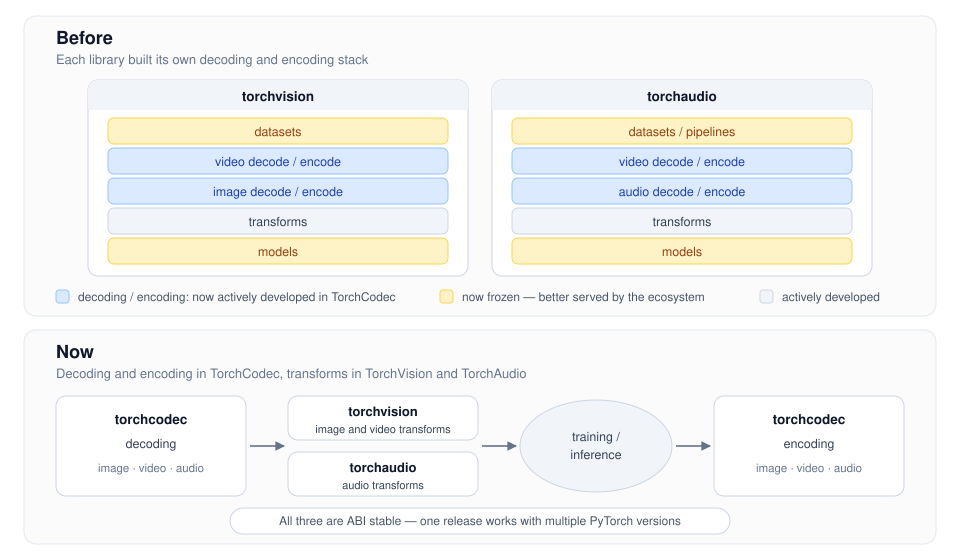
PyTorch consolidates media I/O in TorchCodec and refocuses vision/audio on transforms

PyTorch consolidates media I/O in TorchCodec and refocuses vision/audio on transforms

The PyTorch team has consolidated image, video and audio decoding and encoding in TorchCodec. TorchVision and TorchAudio now focus on transforms, while models and datasets move to the Hugging Face ecosystem. The change simplifies dependencies and builds, improves CUDA performance, and makes the libraries ABI stable. For teams running local pipelines, this means a more maintainable media stack independent of PyTorch's release cadence.

05 Oct #Hardware #LLM On-Premise #Fine-Tuning

๐Ÿ“ OnPremise 3

SAP simulates the enterprise: schema-free synthetic data and the new sovereign perimeter

SAP simulates the enterprise: schema-free synthetic data and the new sovereign perimeter

SAP's Synthesis Through Simulation framework generates enterprise synthetic data by having an LLM agent operate against APIs that enforce simulated policies, without accessing database schemas. Structural validity emerges by construction, not extraction. For self-hosted infrastructures, the sovereignty and TCO calculus shifts: a local pipeline from simulation to fine-tuning reduces cloud dependency and legal approvals, but moves risk onto the fidelity of the simulated environment.

09 Oct
LiteBox: local sandboxing becomes a building block for on-premise AI

LiteBox: local sandboxing becomes a building block for on-premise AI

Microsoft published the first tagged release of LiteBox, a Rust sandbox to isolate Linux on Linux and Linux on Windows. The signal is maturity: stronger isolation than containers, cross-OS portability, useful for self-hosted LLM pipelines. It reduces dependence on cloud sandboxes and strengthens sovereignty. Overhead, attack surface and operational integration remain to be assessed.

08 Oct
ROCm 10.1: The Software Cadence Reshaping On-Premise TCO

ROCm 10.1: The Software Cadence Reshaping On-Premise TCO

ROCm 10.1 confirms AMD's six-week cycle for its GPU stack. More than individual features, predictability matters: for self-hosted deployments it reduces the risk of being stuck on old versions and makes software a governable part of the pipeline. Stack maturity enters TCO alongside VRAM and performance. Unknowns remain on framework compatibility, SKUs, and release quality.

06 Oct
โ† 2026-W40 All news 2026-W42 โ†’